0
0

ISLAMABAD, Oct 23: The Public Accounts Committee of the National Assembly took up on Tuesday a unique case of bureaucratic hurdles in which a quality research for local production of injections for hepatitis-C patients was scuttled at an advanced stage.
Had the project for producing interferon injections gone ahead, the country would have saved about Rs70 billion which the government has been spending for importing the injections, the committee was informed.
The project was scuttled about two years ago by the Ministry of Science and Technology, allegedly at the behest of multi-national companies and now it is in a shambles.
Worse still, renowned molecular biologist Dr Riazuddin who made the whole project possible was subjected to investigation by the Federal Investigations Agency for alleged financial corruption and his name was put in the exit control list (ECL). However, Dr Riaz was later exonerated from all charges.
A meeting of the PAC presided over by PPP’s Yasmin Rehman in the absence of Nadeem Afzal Gondal decided to get the matter investigated by the National Accountability Bureau (NAB). It also set up a three-member committee headed by Dr Samar Mubarakmand and comprising HEC Executive Director Dr Sohail Naqvi and Science and Technology Secretary Alkhlaq Ahmad Tarar for reviving the project.
The committee is required to submit its recommendations by Nov 15. The committee fully supported the project and decided to write letters of appreciations to FIA officials for conducting a fair investigation and to Dr Riaz for his selfless service to the country.
The project was initiated in 2005-2006 at a cost of Rs2 billion to eradicate hepatitis from the country. Research was undertaken by Dr Riaz and his team at the Centre of Excellence in Molecular Biology (CEMB) of the Centre of Applied Molecular Biology (CAMB) in the Punjab University.
The project showed tremendous progress and succeeded in cloning 18 human pharmaceutical protein genes within the first three to four years. The proteins cloned by the experts included insulin for diabetics, erythropoietin used in kidney transplantation, four types of interferon injections for hepatitis patients, four types of interleukin for developing immunity in patients, three types of myosin and four types of connexin for bone fracture healing. Dr Riaz informed the committee that after initial successful tests of interferon when his team was getting ready for clinical tests, the bureaucracy came into play and did not allow it to go ahead with the tests.
He named former science and technology secretary Nadeem Irfan as the key player who had spoiled the entire project and not allowed the research centre to go for final tests after which the product would have been ready for the market.
Mr Irfan has now retired. Dr Riaz said not only his team of 11 experts was scattered but the entire lab was shredded.
Answering a question, Dr Riaz said at present various brands of interferon were being imported from different countries. All these brands are beyond the reach of poor hepatitis-C patients. “Had our project not been stopped, the procedures we developed at the centre would have made it possible to produce interferon at an affordable price of Rs70 per injection, compared to Rs900 in the market,” he claimed.
Yasmin Rehman, who knew the project in detail as a member of the National Assembly’s Standing Committee on Health which had in 2010 investigated the project before its devolution to the provinces, supported Dr Riaz and said his work for the production of interferon had been endorsed by international labs, but people with vested interests did not want the poor people to buy affordable medicines.
“As per research, hepatitis-C is turning out to be a major killer disease in the country, and if the current trend persists, 60 to 70 per cent of hospital beds will be occupied by hepatitis patients in the coming years,” Ms Rehman said. She accused the government machinery of playing a dirty role in stopping Dr Riaz and his team.
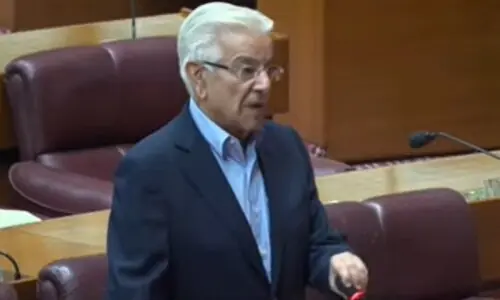
Khawaja Asif and Khurram Dastagir of the PML-N and Hamid Yar Hiraj of the PML-Q called for immediate revival of the project and asked the committee to recommend exemplary punishments for those who had created hurdles in its successful completion.