0
0

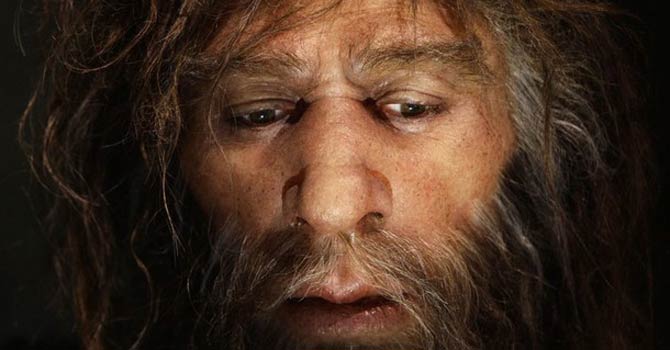
PARIS: A scrap of bone found in a cave in Siberia has shed light on the genetic odyssey of an enigmatic group of humans called the Denisovans, scientists reported on Thursday.
The existence of the Denisovans only emerged in 2010, through a piece of finger bone and two molars unearthed at the Denisova Cave in southern Siberia's Altai Mountains and dated to around 80,000 years ago.
But what the Denisovans looked like and what happened to them remained in a fog.
Nothing was known other than that they were contemporaries of the Neanderthals, another “cousin” species of Homo sapiens which may have been wiped out by the arrival of anatomically modern man or, say some, interbred with him.
Anthropologists in Germany have now carried out what they say is the fullest and most accurate genomic scan of Denisovan DNA, thanks to a tiny sample teased from the finger bone.
It shows that the finger came from a girl and, by comparing the chromosomes inherited from her mother and father, suggests the Denisovans were a tightly-knit bunch, as there is little sign of wide genetic spread.
But a comparison of the genome with that of 11 modern humans from around the world suggests that they may have spread quite widely to parts of Asia.
Modern populations from the islands of Southeast Asia, including Papua New Guinea, share genes with them, including variants that are associated with dark skin, brown hair and brown eyes.
Even so, the Denisovans' genetic similarity with H. sapiens is limited, according to the paper, which appears in the US journal Science.
The comparison notes some 100,000 changes in the H. sapiens genome since the Denisovans' reign.
Many of them are associated with brain function and the development of the nervous system, and others may affect the skin, the eye and the shape of teeth.
“This research will help determining how it was that modern human populations came to expand dramatically in size as well as cultural complexity, while archaic humans eventually dwindled in numbers and became physically extinct,” said lead research Svante Paabo of the Max Planck Institute for Evolutionary Anthropology in Leipzig, eastern Germany.