RAMALLAH: In an odd twist to the decades-old Israeli-Palestinian saga, a former Israeli soldier has embarked on a new fight: He wants to renounce his Israeli citizenship and move to a Palestinian refugee camp in the West Bank.
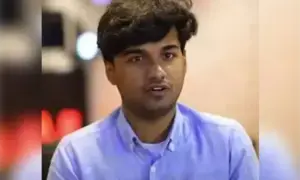
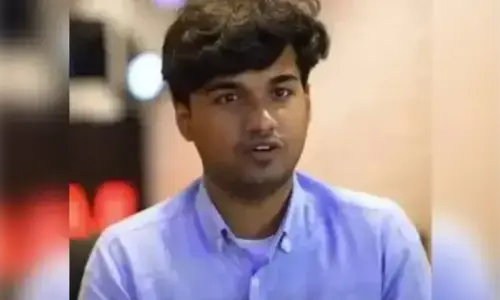
Andre Pshenichnikov, a 23-year-old Jewish immigrant from Tajikistan, was recently detained by Israeli police for residing illegally in the Deheishe Refugee Camp near Bethlehem. There he told police that he wants to break all ties with Israel, give up his Israeli citizenship and obtain a Palestinian one instead.
Pshenichnikov is currently travelling in Europe for two months. When he returns, he hopes to move to the West Bank.
It's incredibly rare for Israelis to seek to live under Palestinian rule. There are only a few known cases of Jewish Israelis who have done so, mostly ones who have married Palestinians, as well as a journalist for the Israeli daily Haaretz who moved to Ramallah and reports from there.
None are known to have renounced Israeli citizenship—though some Israelis living abroad have. Nor are any known to have sought Palestinian residency instead. People are not allowed to be dual citizens.
Reached at his Israeli home, Pshenichnikov's mother Svetlana said she was troubled by her son's plans.
''I'm his mother and I am trying to support him like a mother should,'' she said.
''But I don't support his war. The family immigrated to Israel when Pshenichnikov was 13. Israel grants automatic citizenship to anyone who is Jewish. He later completed his three years of mandatory military service, enlisting as a computer programmer in the army's signals corps, and even served an additional year and a half as a career soldier.
But sometime during his military service, he began to question Israel's relationship with the Palestinians. Since then, he has completely rejected his adopted country. After his service ended, he moved to the refugee camp in April and worked as a waiter in a Bethlehem hotel and as a construction worker in Deheishe.
''I hate Zionism ... I want to be part of the Palestinian resistance,'' Pshenichnikov told The Associated Press.
''I call for other Israelis who support the existence of a state of Palestine to do the same, to come live in the West Bank or Gaza as Palestinians.”
The Palestinians want to make the West Bank part of an independent state. For the time being, in accordance with past agreements with Israel, they technically don't have a Palestinian citizenship but the self-rule authority issues ID residency cards and Palestinian passports.
Pshenichnikov said he chose to live near Bethlehem in hopes of taking advantage of his fluency in Russian to guide Russian tourists in Jesus' traditional hometown.
Residents say he was initially treated with suspicion. Many Palestinians suspected him of being an Israeli spy and Palestinian officials eventually handed him over to Israeli authorities.
But Pshenichnikov remained undeterred, returning to Deheishe where was apprehended by Palestinian forces and handed over to Israel again.
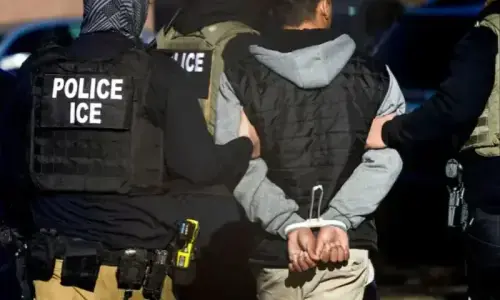
Israeli police released him under restrictive conditions and banned him from entering the Palestinian-controlled areas pending the end of legal proceedings against him.
Tareq Abu Sheikha, who rented Pshenichnikov a room for a month, said he was ''suspicious and not honest.''
Abu Sheikha said Pshenichnikov presented himself as a Russian foreign activist and was even seen throwing stones at Israeli soldiers during demonstrations. But he was also heard speaking in Hebrew on his phone and carried his old military ID card with him.
''We don't have a problem with any Israeli coming to be one of us. We'll be honoured and give them an ID card, but this young man was suspicious and he lied and that's why we handed him to the Israelis,'' he said.
Officially renouncing Israeli citizenship is a lengthy, complicated process. Interior Ministry spokeswoman Sabine Hadad said that one has to file a request at an Israeli representative office overseas, prove that one has another citizenship and then await a ruling, which is not always granted. She said she wasn't familiar with Pshenichnikov's case, but that only few hundred people have their citizenship revoked each year.
The Israeli military declined to comment on Pshenichnikov.
Abdel-Fatah Hamayel, the governor of Bethlehem, said that in principle there should be no problem granting Pshenichnikov Palestinian citizenship, but that it would have to go through the proper legal channels.
''He wasn't supposed to come illegally. If people knew his true identity, there's no guarantee for his safety. He should have informed the Palestinian side with an official request and his request would be considered,'' he said.