0
0

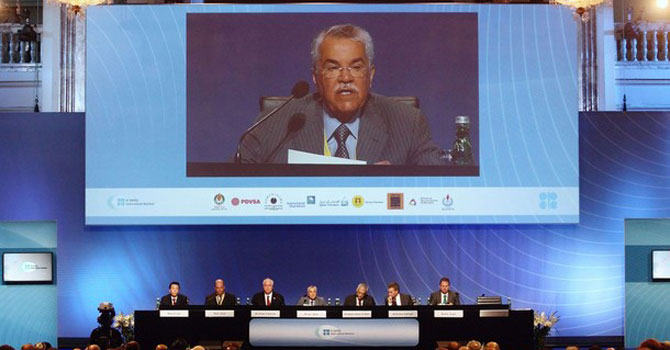
VIENNA: Saudi Arabia came under pressure on Wednesday from fellow Opec producers to cut oil output to prevent a further slide in crude prices.
Price hawks in the Opec are fretting that slowing economic growth will send crude, already off $30 since March, plummeting further.
“We think that given the economic situation, above all in Europe, there is a serious threat that prices might fall drastically and so our policy is to defend the production ceiling agreed in December,” said Venezuelan Oil Minister Rafael Ramirez ahead of an Opec meeting on Thursday.
“I am afraid of this fall, anything below $100 is very painful for Libya,” said Libyan Oil Minister Abdulrahman Ben Yazza.
Brent crude traded just over $97 a barrel on Wednesday having peaked this year at $128 in March.
A moderate on oil prices, Saudi Arabia initially floated a proposal to lift Opec's output target. But Riyadh quickly dropped the idea and the 12-member group looks set to leave its production ceiling unchanged at 30 million barrels a day.
But extra oil from Saudi Arabia has boosted actual output to 31.6 million bpd, a production rate in excess of demand that is building world inventories rapidly.
A report from Opec estimated inventories rose by 2.1 million bpd on average in the first quarter of the year during a seasonal period when stocks normally decline.
Supply and demand data suggests a build on a similar scale in the second quarter.
“In the face of such gloomy uncertainty Opec should be discussing production restraint on Thursday,” said David Hufton of London oil brokers PVM.
“We have two major concerns, unknowns, going forward: the eurozone crisis and its impact on oil demand and the full impact of EU sanctions on Iran,” said a senior Gulf Opec delegate.
Riyadh's preferred oil price is $100 a barrel, a level it feels permits oil investment without hurting economic growth, while most in Opec want to defend $100 as a price floor.Rising Saudi supply, taking Riyadh to a 30-year high of 10 million bpd in April, will provide insurance against output losses from Iran.
In the United States, where Saudi crude imports have risen sharply this year after years of decline, crude stocks are at their highest since 1990.
Iranian output is already down about 40 per cent, 1 million barrels daily, to 1.5 million bpd since the end of last year, the International Energy Agency said in a report.—Reuters