0
0

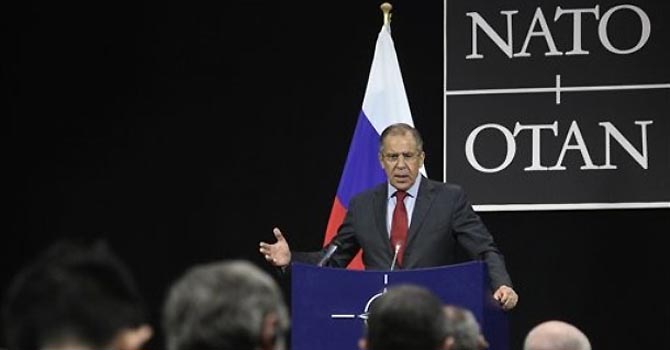
MOSCOW: The United States said on Wednesday it was fully committed to completing an anti-missile shield in Europe even as Moscow promised to use computer modelling to show an international conference how the Nato system threatens its security.
A dispute over the system has slowed improvements in Russian-US ties and is likely to remain an irritant after Vladimir Putin returns to the Kremlin next week for a six-year presidential term.
Washington says the shield, due to be completed in four phases by roughly 2020, is meant to counter a potential threat from Iran.
Moscow says the system will undermine Russia's nuclear deterrent because it could also give the West the ability to shoot down Russian missiles.
The shield's first phase is to be declared up and running at a Nato summit this month in Chicago.
At a Moscow conference starting on Thursday, Russia will use results of computer modelling to show “how Nato missile defence facilities ... may affect Russia's forces of nuclear deterrence,” Deputy Defence Minister Anatoly Antonov told the government daily Rossiiskaya Gazeta.
“We would like to explain, in language that is clear to military and technical experts, what consequences implementation of the US and Nato missile defence plans will lead to,” Antonov said.
Madelyn Creedon, US assistant secretary of defense for global strategic affairs, said in a telephone news conference that US negotiators hadn't seen the simulation but were looking forward to it.
“The United States has been very clear that the systems are not designed nor intended to engage in any way Russia's strategic defense,” she said. “It is, in fact, very important to us that we maintain strategic stability between the US and Russia.”
The Moscow missile-defense conference will be attended by senior US and Nato officials, non-Nato European nations and countries such China and India, Antonov said. More than 50 nations planned to attend, he said.
Ellen Tauscher, the US special envoy for strategic stability and missile defense, told the teleconference that the United States was fully committed to building its system and that it posed no threat to Moscow.
“We cannot agree to preconditions outlined by the Russian government. We cannot agree to any limitations on our missile defense deployment,” Tauscher said. “We are able to agree, however, to a political statement that our missile defenses are not directed at Russia.” Her remarks came several weeks after US President Barack Obama was caught on an open microphone telling outgoing Russian President Dmitry Medvedev he would have “more flexibility” to deal with contentious issues like missile defense after the November 6 US presidential elections. He urged Moscow to give him “space.”
Asked about the comment, Tauscher said Obama and Medvedev had agreed at the global nuclear security summit in South Korea to have their technical experts continue meeting to get a better understanding of each other's concerns. For that reason, US officials are attending the 50-nation conference in Moscow.
“Given the longstanding difference between the US and Russia on this issue, it will take time and technical work before we can reach an agreement,” Tauscher said. “And because 2012 is an election year in both countries, it is clearly not a year in which we are going to achieve a breakthrough.”
Tauscher insisted there was no deadlock despite the apparently unyielding US and Russian stances. If deadlocked, she said, Obama and Medvedev would not have directed their technical experts to continue meeting.
Russia and Nato agreed in 2010 to seek ways to cooperate on missile defence but have failed to reach a deal. The Kremlin wants a legally binding guarantee the system will not be used against Russia. The United States says it cannot agree to any formal limits on missile defence.
Moscow has said that it could deploy weapons to overcome the shield and perhaps target missile installations if its security concerns were not addressed by Nato.
Obama pleased the Kremlin after he entered the White House in 2009 by scrapping his predecessor's plan for long-range interceptor missiles based in Poland, part of a reset of strained ties with Russia.
But Russia remains opposed to his revised plan, saying the system, which involves shorter-range interceptors to be based in Poland, Romania and on warships in the Mediterranean, would still be able to target Russian missiles.