1
1

“The University has two distinct portfolios. One is academic in nature, whereas the other is administrative in function. It would not be advisable to switch over one in lieu of the other even as an ad hoc arrangement. It is waste of a good, highly-qualified professor in a subject to be squandered away on an administrative assignment. This would be, besides other failings, at the cost of University proficiency, dexterity and efficiency, ability, something which is undesirable.”
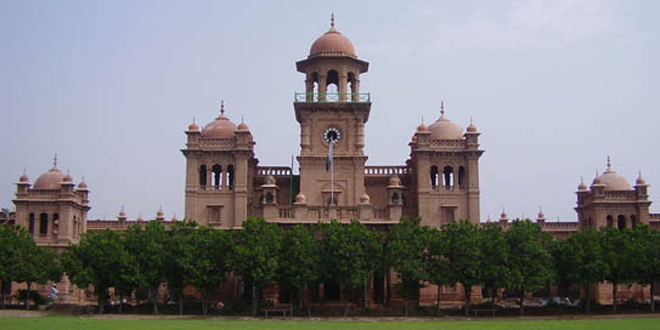
These were the views expressed by a former governor, who also happened to be the chancellor of local government universities, in his letter to University of Peshawar after a professor was appointed to an administrative post in 1991.
It is ironic that a practice, which was strongly opposed by a former chancellor, continues. Even today, teachers are working on many important administrative posts in UoP.
Whether it is the post of controller (examinations) or that of director (admissions), director (planning and development), provost or deputy provost, teachers hold them as additional responsibility.
Moreover, the recently-enacted Peshawar University Act, 2011, has further tilted the balance in favour of professors (teachers), who now not only have easy access to the top administrative key posts of the registrar, controller (examinations) and treasurer but due to their overwhelming strength and corresponding political clout have all but elbowed out admin stream staff from these positions.
It seems that these administrative posts have always held attraction for professors as they allow them extra perks and privileges over and above those, which they already enjoy.
Policy letters have, from time to time, been issued by higher authorities discouraging such practice but who cares.
Such is the temptation of these assignments that the teachers’ lobby always influences the administration to appoint professors against these purely administrative posts. Sometimes the vice chancellors have also used it as a bribe to keep troublesome professors quiet.
Who gave so much power and access to the administrative post under the new law? It is said that the new Act was drafted by influential teachers affiliated with different political groups.
Chapter-III Section 13, 14 & 15 of the Act, related to the appointment of the registrar, controller of examinations and treasurer (BPS-20) says, “There shall be a registrar (controller of examinations, treasurer of the university), who shall be appointed by the syndicate, from amongst the officers or teachers in BPS-19 or above, on such terms and conditions as may be prescribed.
The term of the office of the registrar (controller of examinations/ treasurer) shall be three years and may be extended from time to time.”
The new Act has rendered senior most positions as tenure appointments. Resultantly, while teachers occupying these positions would be going back to their career at the end of their tenure, any lucky administrative officer making it to one of these positions would, at the end of the tenure, have nowhere to go with all experience and ample time before superannuation. Some fear that administrative officer will be cooling their heels as an OSD or on an insignificant job hoping against hope when another such opportunity comes and no teacher is interested to take it.
As per the provisions in the new Act, any blue-eyed assistant professor (BPS 19), an associate professor (BPS 20) and a full professor (BPS 21) can be posted to senior most administrative posts without competition. Given the fact that the post of assistant professor is that of grade 19 and since a fresh PhD with no prior experience can be directly selected against the posts, such direct appointees to grade 19 with no prior teaching or administrative service shall be entitled to these posts. According to Murphy’s laws, ‘If it can go wrong, it will go wrong’. Therefore if such a loophole remains in the regulations, it could be and will be exploited at convenience.
So under the new Act, a fresh PhD can also get attain such a position without any prior experience whereas an experienced administrative staffer can simply wait as his or her chances of attaining higher grades would be dwindled or finished.
One wonders how could an institution of higher education progress when professors, who are sent abroad at the cost of tens of millions of rupees for improving their academic, teaching and research capabilities, manage to relieve themselves from their obligatory duties. One wonders whether their goal is to Of the teachers tempted by administrative posts become a better teacher, researcher or administrator or doing all the three jobs at a time, they may end up becoming good at none.
Such concerns were also shown by a former Higher Education Commission chairman and federal minister Professor Dr Attaur Rehman in a letter sent on November 19, 2002, to the universities advising them not to waste talent of professors.
The letter said, “As you are aware that our universities are facing acute shortage of teachers holding PhD degrees particularly in science discipline; hence, it is imperative to ensure optimum utilization of whatever strength is available with us in the country.
“It has been noticed that sometimes the universities depute such teachers to work at administrative jobs, which in our view tends to waste their caliber and faculties as well as the investment made in them for obtaining the higher qualification... It would be advisable if the Universities, taking into account this aspect, avoid assigning administrative jobs in the Universities to such qualified teachers so that their faculties can fully be utilized for benefit of students and the Universities in their related discipline.”
A recent HEC grading of the country’s public sector universities showed that University of Peshawar and a few other major universities of the province still need to improve their academic status to be on the top of the list.
Perhaps it is time the high courts or Supreme Court take suo motu action against higher education institutions charging high fees from students in morning and evening classes and yet have not come to the top in higher education ranking. This is required especially in view of the word going round that efforts are underway to make the 2011 Peshawar University Act as the Model Act for all universities of the province.
Professors have got the highest possible packages in shape of top grades and maximum salaries in the form of Tenure Track System. They are already well respected and privileged in society. They don’t need to look for extra benefits (2OD Car with driver) and perks.
Teachers will do their students and their departments a great service if they focus on improving higher education and develop an environment for research. A teacher’s job is to teach so they must better leave petty administrative jobs to those, who are appointed to do it.