0
0

NEW DELHI: India's government said Monday it would soon steer the country back to “a high growth trajectory” of eight to nine per cent annual expansion, despite global economic uncertainties.
President Pratibha Patil told the opening session of parliament that the long-term fundamentals of India's economy “remain robust” as she outlined the Congress-led government's legislative blueprint mid-way through its term.
“My government is confident that it will soon steer the country back to the high growth trajectory of eight to nine per cent,” Patil told the joint session of parliament.
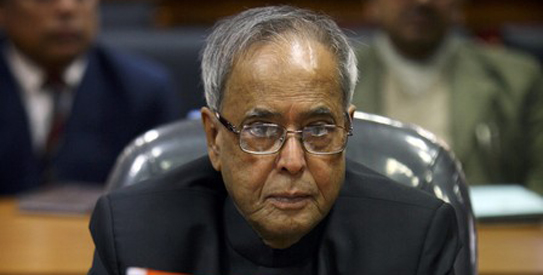
Patil's speech came ahead of the budget due Friday in which Finance Minister Pranab Mukherjee is expected to set a growth target of 7.5 per cent to eight per cent for the next fiscal year to March 2013, up from a forecast expansion of 6.9 per cent this year.
“This was a difficult economic year for the world,” Patil said. “The economic growth of India has decreased but is better compared to the world economic scenario.”
The government, which made little legislative headway in the last sitting of parliament, is expected to face another stormy session after suffering a drubbing in recent state elections and enduring a series of corruption scandals.
Patil appealed for lawmakers to work “in a spirit of constructive cooperation” -- even as several lawmakers tried to shout her down with demands for farmers' rights.
The president reaffirmed the government's commitment to bring in a long-awaited Goods and Services Tax to harmonise levies across India's 29 states that complicate the movement of goods.
The tax is one of the government's most important proposed reforms but must be approved by two-thirds of parliament and half of India's states to become law, meaning the coalition will have to rely on opponents to see it passed.
The government also said a contentious land acquisition act will be introduced to address concerns of farmers whose fields are purchased for the nation's rapid industrial development.
Patil stressed the government's commitment to provide “livelihood security” for the country's 1.2 billion population and “to work for removal of poverty, hunger and illiteracy from our land”.