3
3

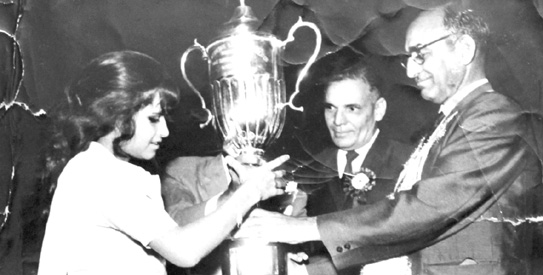
Pakistan’s women hockey team may be verging on non-existence at the moment but things were very different back in the late 1970s when the first women’s team was formed.
“Hockey is a great game and we enjoyed playing it very much. Pakistan was doing very well in men’s field hockey at the time and we hoped to do as well as the boys in this game. That was the kind of passion that drew us to this sport,” says the sober lady sitting across me in a hijab. She doesn’t look anything like the young dare devil, known as the “sixth brother” by her five male siblings.
“All my brothers played cricket like our father, Aziz Swaleh, who used to open for his team. I myself was captain of our neighbourhood cricket team, a boys’ team mind you,” says Mrs Naz-e-Alam Sherazi while suppressing a chuckle. “Not being allowed to play with my brothers’ club team because I was a girl, I used to sit and watch them play from the boundary. Still, that didn’t stop me from serving as a ball picker during their matches,” she remembers.
“With women’s cricket still unheard of here, we got into hockey. I still remember the girls I used to practice with. There was Farhat Wahab, Rumana Hakeem, the talented sisters Fahmida Mustafa and Waheeda Mustafa (a great goalkeeper), Sultana Yousuf, my captain Baira Mahmood, etc. I don’t think any of them are associated with sports anymore. I have lost touch with all of them,” regrets Mrs Sherazi, who was the vice captain of her team, the Pakistan Greens.
“Come rain or shine, we used to practice on the hard ground at Karachi’s YMCA for two hours every day, even while fasting during Ramazan. The ground we used to practice on was the muddy katcha ground and not the proper evenly-laid field used by the men, which was off-limits for us. Still, we never complained and carried on with our routine. The uneven muddy field actually did us more good than any damage. We were able to build more stamina and our leg and thigh muscles grew stronger. But for the regular matches, we played on the same grounds as the men such as the Hockey Club of Pakistan in Karachi,” she says.
Being the youngest daughter who always had her way, and with a family background in sports, she always had her family’s support but that didn’t mean that the world outside her home was as comfortable with the idea of women taking to the field as her loved ones. “I played in some five national championships, travelling all over the country and confronting all kinds of attitudes. I still remember how scared we were on our visit to Bahawalpur where some clerics were completely against women’s sports. Afraid to even set foot into the city, we spent the entire night on the station inside our train bogie with our coach and manager keeping guard outside. It was back to Karachi the very next morning,” she shudders at the memory.
They never toured abroad although they heard about many planned trips off and on, which couldn’t materialise in the end. “But despite that we followed a very hectic schedule playing in domestic tournaments the year round. In fact, our bags would always be packed, returning from one event and heading off to play in another the very next day,” she shares. “I used to weigh 72lbs at the time and having to wash my hair again and again to do away with the sweat and grime, I kept it cropped, sporting a boy’s cut all the time,” she adds.
“The Pakistan Hockey Federation was good to us. During camps we also got a meagre daily allowance which we were all very happy with as we didn’t have any major expenditures of our own. Our kits, shoes, equipment, etc., all came through the sponsors that the federation found for us. Still I played with my own hockey stick, which I still have with me,” she smiles.
Playing as centre-half, passing the ball quickly to the forwards to provide them the opportunity to score, while also having the option of doing it herself, she knew firsthand what being a good team player was all about. It came in handy when the country invited their first women hockey team from Ireland in the early 1980s. Mrs Sherazi by that time had completed the hockey umpiring course and was the reserve umpire during the series. She was also the national team’s camp commandant at the time.
But that was after she got married to Syed Altaf Hussain Sherazi. They met on the field. But Mrs Sherazi didn’t even know then that she had an admirer watching her from the sidelines. “I would be playing hockey and he, as coordinator for the Sindh Sports Board, often dropped by to make sure that the grants and funds forwarded to us by the board were being put to proper use. That’s how he approached my friend to inquire about me one day. She quickly informed me, of course. Apart from his official duties, he was a smasher in volleyball and a triple jump athlete. We both loved sports. It was a good match and above all he was as supportive of my sports activities as my own family,” Pakistan Cricket Board’s current regional representative in Karachi remembers.
About her moving to cricket after accomplishing so much in hockey, she says, “It breaks my heart to see women’s hockey not getting anywhere after all the hard work we put in to give it a strong foundation. They should have used our experience to groom the new lot. I would have gladly been of any assistance had anyone asked me. I would have done it on an honorary basis, too, like I’m doing with cricket, and I’m sure my old team-mates would have done the same. But nobody in the federation now seems to be interested and the game has suffered badly due to this. It is also why I don’t go to watch any women’s hockey matches anymore,” she says.
“So I have turned my attention to women’s cricket. I have been associated with it for over six years now and am proud to see my girls do so well in this sport,” she concludes.