0
0

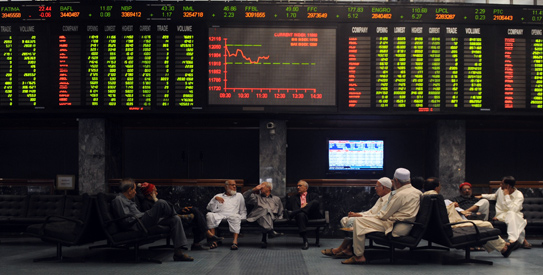
KARACHI: Pakistani stocks ended lower on Thursday as investors sold shares of heavyweight Oil and Gas Development Co Ltd (OGDCL) after it reported lower-than-expected corporate earnings, dealers said.
OGDCL reported a net profit of 41.57 billion rupees ($457.87 million) for the first six months of the 2011/12 fiscal year, which was below market expectations.
Net profit last year for the same period was 31.6 billion rupees.
The Karachi Stock Exchange (KSE) benchmark 100-share index fell 0.70 per cent, or 87.75 points, to end at 12,515.92 points.
Turnover fell to 178.04 million shares, compared with 194.11 million shares traded on Wednesday.
“Disappointing results by OGDCL led to decline in share prices of all leading shares,” said Samar Iqbal, a dealer at Topline Securities.
OGDCL closed 2.36 per cent lower at 162.30 rupees.
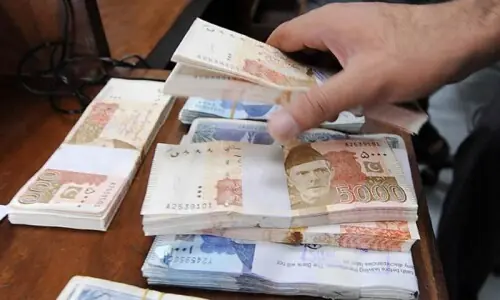
In the currency market, the rupee ended weaker at 90.80/83 to the dollar, compared with Wednesday’s close of 90.75/79 due to an increase in import payments.
Dealers expect pressure on the local unit to continue due to rising international oil prices, which rose to a nine-month high above $124 per barrel on Thursday.
The rupee touched a record low of 91.28 to the dollar in January, pressured by worries about higher payments for oil imports and the country’s overall economic health.
Islamabad is also repaying an $8 billion International Monetary Fund loan. A $399 million repayment of the loan is due on Friday.
The State Bank of Pakistan cautioned this month that financing the country’s projected current account deficit would be a challenge.
The deficit is expected to widen further in the coming months because of debt repayments and a lack of external aid.
The current account recorded a provisional deficit of $2.633 billion in the first seven months of the 2011/12 fiscal year, compared with a deficit of $96 million in the same period last year, according to data from the State Bank of Pakistan.
Dealers said they were also cautious after the International Monetary Fund (IMF) advised Pakistan to take immediate steps to tackle growing budget pressures and raise interest rates to contain inflation.
The central bank kept the key policy rate flat at 12 per cent for the next two months in its monetary policy announcement earlier this month.
The IMF in February projected a widening of Pakistan’s budget deficit in the 2011/12 fiscal year to 7 per cent of gross domestic product, compared with the government’s revised budget target of 4.7 per cent.
In the money market, overnight rates fell to 9 per cent, compared with Wednesday’s close of 11.90 per cent amid increased liquidity in the interbank market.
Dealers said there were scheduled inflows of 36 billion rupees ($396.52 million), against outflows of 6 billion rupees.