ISLAMABAD: President Asif Ali Zardari on Friday denied that Pakistan's military played a double game in the 10-year war in Afghanistan, but admitted that private Pakistanis may be involved.
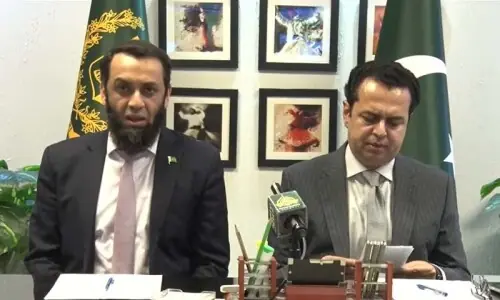
The leaders of Afghanistan and Iran held talks for a regional summit in Pakistan here at a key juncture in peace efforts with the Taliban and amid rising tensions between Tehran and Israel.
Talks focused on strengthening regional stability, cooperation against counter-terrorism, drug trafficking and trade.
“I deny this notion that any of our armed forces are directly or indirectly involved,” he told a news conference when asked about evidence pointing to the involvement of Pakistani spies and officials in the “war on terror”.
“Yes I cannot deny that there is a residue in Pakistan of the war that was fought against the Soviet Union,” he said referring to Pakistan's involvement in the 1980s war in Afghanistan that gave rise to the Taliban and al Qaeda.
“We cannot deny may be there are people among our population who are involved in this, but this is a world problem,” Zardari told the news conference flanked by his Afghan and Iranian counterparts after a summit.
“The three presidents you see sitting together, we shall fight this menace. Nobody is more concerned or more involved in it than me personally,” he said.
Iranian President Mahmound Ahmadinejad on the other hand blamed foreign powers for interfering in regional affairs.
“There are countries that are determined to dominate our region. And they have targeted our region for their domination and hegemony.”
The Iranian president did not say to which countries he was referring. “We should deny others the opportunity to interfere in our affairs.”
Meanwhile, Afghan President Hamid Karzai called for action rather than words, as Kabul seeks to enlist Islamabad's assistance in bringing the Taliban to the negotiating table.
“What we need now is to formulate a policy that is actionable and implementable and actually act upon it,” he said.
“Our meeting today at the tripartite of the three countries was one that was futuristically orientated with recognition of the opportunities and dangers around,” the Afghan leader said.
He further lauded dialogues between Pakistan and Iran and said drug money was being used in fanning extremism.