0
0

ISLAMABAD, Feb 16: A liberal visa regime between Pakistan and India is in final stages to facilitate movement across the border of people, especially businessmen.
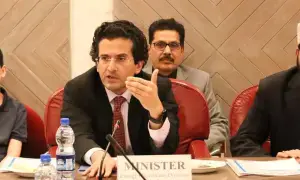
Indian Commerce Minister Anand Sharma, who is leading a large business delegation, said here on Thursday that the new visa regime would be for all people.
However, the business community would get special consideration, he told this correspondent. He said the condition of police reporting and restriction on visiting more than a few cities would be removed.
He said India was working on an arrangement for Pakistani businessmen similar to that for the business community of other trading partner countries.
The visa agreement of 1974 will be completely revised.
Mr Sharma said his ministry had discussed the new visa regime with the home minister, adding that deliberations among commerce, home and external affairs secretaries were in final stages.
“India expects a reciprocal gesture from Pakistan.”
Proposals on a new visa regime have been exchanged and a joint working group set up to work on them.
He termed his visit to Pakistan historic and said friendship and commerce would go side by side and both countries would benefit from continuation of talks.
Asked about the ‘composite dialogue’, he said progress had been made in every area, especially in trade talks, over the past 10 months.
Mr Sharma said regional integration on the pattern of Asean, European Union or Nafta would serve the cause of peace.
“People on both sides want lasting peace in the region. They have rejected violence in any form and shape.”
Commenting on the federal cabinet’s decision to defer the approval of a ‘negative list’ for bilateral trade, he said a similar thing could happen in India if all requirements were not met before the submission of a summary.
“The prime minister of Pakistan has given us an assurance to adhere to the roadmap agreed in November for trade liberalisation,” he said. “I am optimistic about the deadline conveyed to us about the negative list.”
According to Mr Sharma, Pakistan’s commerce minister and secretary had informed the Indian government during their visit that a small negative list would be approved.
He said issues relating to investment would be taken up at a later stage and the possibility of using the Munabao-Khokrapar route for trade cargo would be explored.
He said most of the trade between the two countries was carried out through third countries or smuggling, but three proposed agreements finalised on Wednesday would divert all of it to the formal channel. He said the agreements would soon be approved by the Indian cabinet.
However, he indicated that India might wait for Pakistan’s decision on the negative list.
Currently, only half a per cent of India’s global trade of $750 billion is with Pakistan. The proposed liberalisation will provide a market of 1.8 billion people to Pakistani products, from textile and minerals to foodstuff. But trade would have to be mutually beneficial, Mr Sharma said.
He said more trade would also help Pakistan to develop its industry.
India would reciprocate every trade facilitation measure, he said. “If Pakistan takes one step, India will go two steps forward.”
But at the same time, India linked trade facilitation under the South Asian Free Trade Area (Safta) to Pakistan’s commitment at bilateral level and Safta sensitive list to Pakistan’s negative list. Pakistan has already made a 20 per cent reduction in the sensitive list under Safta.
The Indian side said a 30 per cent reduction in its sensitive list would be announced four months after Pakistan’s notification of the negative list. Further liberalisation of the sensitive list would follow abolition of the negative list.
Mr Sharma said trade talks between Pakistan and India were at present focused on electricity and petroleum products.
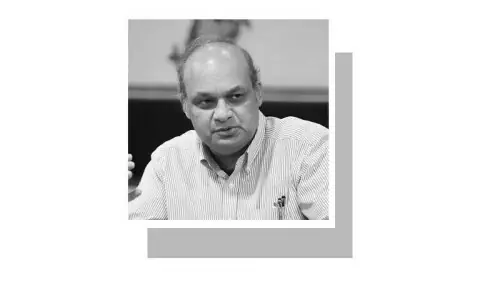
Indian Commerce Secretary Rahul Khullar said much progress had been made in trade since April last year when talks resumed after having been suspended in the aftermath of the Mumbai terrorist attack.
“Things are on the right track,” he said, adding that it would be wrong to expect to change the decades-old trade regimes in 10 months. “These efforts at the technical and senior levels will culminate in positive results.”