0
0

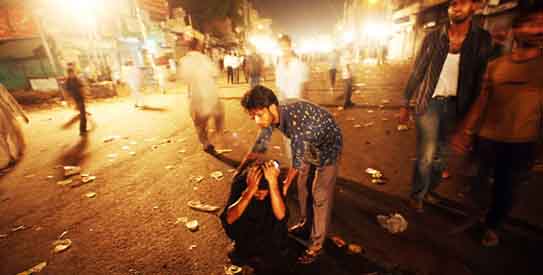
ISLAMABAD: Extremism is a greater threat to Pakistan than terrorism and reporting the incidents that violate norms of peaceful societies is not given due attention in the public discourse too.
Speakers at the launch of Jinnah Institute’s report ‘Extremism watch: mapping conflict trends in Pakistan 2010-2011’ expressed concerns over rising intolerance among various groups and sects in society.
The report records and examines various types of extremist incidents that occurred in Pakistan over the past year and adds that shrines in the country became comparatively new victim of terrorism during 2011.
In his opening remarks, Ejaz Haider, the executive director of Jinnah Institute, said extremism was a greater menace in terms of the state's ability to deal with it rather than terrorism, and this fact enhanced the importance of studying extremism in the country.
“This is a serious issue. People belonging to all groups and sects have the right to live,” Mr Haider said, adding: “With what is happening, we will ultimately be killing each other and this mindset will not take us anywhere.”
The report is based on research undertaken from September 2010 to September 2011 and highlights four main categories of extremism where violence surged.
Shrines witnessed 62 terror attacks during the review period in which 62 persons were killed and 206 others injured; 44 sectarian attacks resulted in 454 deaths and injuries to 1,089 persons, 53 attacks related to interfaith violence/blasphemy claimed seven lives and there were 62 attacks against schools that killed three persons.
However, the report did not mention the issues relating to conviction and punishments to the attackers, and the speakers paid limited attention to the fact that most of the accused committing terror activities were back in society after remaining behind bars for a couple of years.
Fahad Husain moderated a panel discussion which pointed out that the report had a separate sub-chapter: ‘The uncrowned sectarian commander of Pakistan.’ Malik Ishaq, the key figure of the banned terror outfit, Lashkar-i-Jhangvi, is accused of more than 100 sectarian killings, including the attack on Sri Lankan cricket team, but never convicted.
It has been highlighted how after political manoeuvring Ishaq was released in July 2011 by the Lahore High Court.
Mr Haider acknowledged the need to integrate various issues categorised as extremist activities so that effective policy recommendations could be developed.
The audience commented that speedy justice, rule of law and policies to reverse the situation were required for containing the broadening terrorism in country.
The panellists said Pakistan was not a failed state but under tremendous stress, especially in areas where violence and terror had become entrenched in the last decade.
Salman Zaidi, the deputy director of Jinnah Institute, in his presentation said the size of the state was shrinking. “There are areas without the writ of the state even in cities and the condition in remote parts is deteriorating,” M Zaidi said. “It is a wake-up call for policymakers and legislators.”
Fahad Husain said extremism cannot be eliminated by the force of a gun, instead it requires a certain measure of persuasion which Pakistani society does not appear ready for.
Human rights activist Tahira Abdullah said things were getting worse for almost everybody in the country; however, the citizens of Islamabad and Lahore might not see it.
“Extremist thoughts are being witnessed in crime against women too,” she said, adding Pakistan needed to strengthen terror laws, make them more stringent and enforce police prosecution.