



 0
0

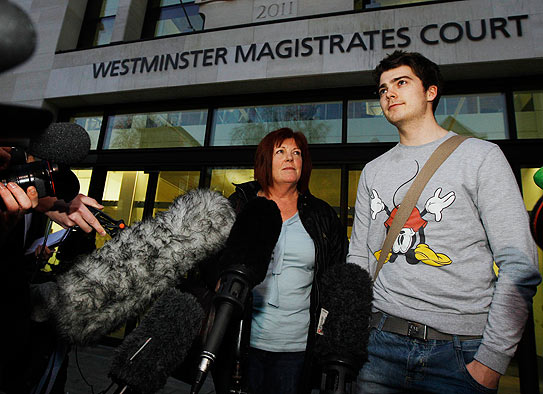
LONDON: A British student who created a website allowing people to watch films and TV shows for free can be extradited to the the US to answer copyright infringement allegations, a court ruled Friday.
Richard O'Dwyer, a 23-year-old student at Sheffield Hallam University in northern England, allegedly earned thousands of pounds (dollars) through advertising on the TVShack website before it was closed down by US authorities.
He faces jail if found guilty of the charges, which were brought after a crackdown by the US Immigration and Customs Enforcement agency.
His lawyer Ben Cooper indicated during the hearing at London's Westminster Magistrates Court that he would appeal the decision, which if implemented would make O'Dwyer the first British citizen to be extradited for such an offence.
“I am obviously disappointed with the judge's decision today,” O'Dwyer said outside court, but added that he had “faith” that he could win an appeal.
His mother Julia O'Dwyer, from Chesterfield in northern England, was close to tears when she came out of the hearing and said she was “disgusted”.
In a statement she condemned Britain's extradition treaty with the United States, saying: “Why are we pandering to the US in this way? I'm appalled. We will look to appeal to a higher court without delay.”
Cooper had argued in court that the website did not store copyright material itself and merely directed users to other sites, making it similar to Google.
The lawyer also argued that his client was being used as a “guinea pig” for copyright law in the United States.
But District Judge Quentin Purdy ruled the extradition could go ahead.
He said he was satisfied that the alleged conduct would constitute an offence under British law, adding that although facing trial abroad was “daunting”, it was important that justice worked across borders.
“Enforcement of cross-border criminal justice is intended, in part at least, to ensure alleged victims of crime and the wider public confidence in criminal justice is not thwarted by national borders,” he said.
The court heard that after O'Dwyer was arrested in London in November 2010, he admitted to police that he owned TVShack.net and TVShack.cc and earned about #15,000 (18,000 euros, $23,000) a month from online advertising.


























