0
0

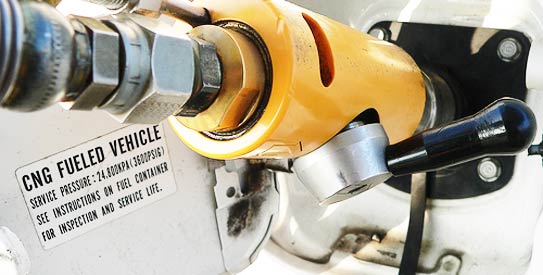
ISLAMABAD: After sticking to its stand for three days, the petroleum ministry finally yielded to the demands of the CNG sector and the transporters who had besieged various points in different cities including Islamabad since the new year began.
The two-day negotiations between the petroleum ministry and the joint delegation of transporters and the CNG stations, which began on Monday, ended on Tuesday with an agreement and a decision to end the strike. The joint delegation of All Pakistan CNG Association and the transporters had presented three demands to the petroleum ministry – reduction in the newly-introduced Gas Infrastructure Development Cess; the end of the ban on public transport vehicles using CNG; and a slight reduction in the loadshedding schedule of CNG stations.
The negotiations on Tuesday began on an ominous note. Barely an hour after the negotiations had begun, Secretary Petroleum Ejaz Chaudhry announced that the demands of the CNG association and the transporters were unrealistic and unreasonable.
“The decision to reduce Cess is beyond my authority and they are free to leave if they are not satisfied with the offers made by the government,” Ejaz Chaudhry said.
He even accused the transporters of playing foul: “They are charging fares on the basis of diesel prices while paying for CNG; this is unreasonable.”
He also said vehicles could not have CNG cylinders placed on rooftops or under the seats.
After venting to the media in this tone, the secretary petroleum left though he did admit that the officials of ministry were discussing options with the CNG sector and the transporters.
Soon after his departure, a couple of transporters, who too were part of the negotiations, told the media that the strike would continue.
“We have asked the government to tell us what rules should be followed while buying and fitting the CNG cylinders as well as explaining why no authority has objected to these cylinders till now,” one of them told the media.
However, other transport representatives remained behind and continued negotiating. One of these groups was Muttahida Transport Association, a recently established confederation of around 100 unions of transporters in Rawalpindi district and the federal territory.
Later, secretary petroleum also reappeared and joined the meeting.
Shortly afterwards, it was announced that the matter had been settled.
The two sides announced that the Cess has been reduced by 50 per cent. (The Cess was increased by 60 per cent on December 30, 2011, while a second increase of another 40 per cent was scheduled for February).
“Ogra will issue the new rates shortly,” the secretary petroleum Ejaz Chaudhry announced, adding the CNG loadshedding schedule would be reduced by eight hours and further reduced when the gas supply situation improved.
The third concession that was made was that public transport vehicles have now been given one month to alter their fittings to meet international standards.
After the meeting, Chairman APCNGA Ghiyas Paracha said: “We have decided to establish a joint team of Ogra, HDIP and the association which will oversee the upgradation process at the public transport vehicles to be completed in one month time.”
He also said the APCNGA and the transporters had highlighted certain amendments to the Ogra rules.
“The Ogra rules were framed in 1992, and they need to be upgraded as a lot of things have changed since that time,” Mr Paracha told the media.
Meanwhile, over the plans to standardise the CNG system in public transport vehicles, an official of Ogra told Dawn that the CNG cylinders would be covered in strong metallic cases to avoid any external contact whether they are placed at rooftops or under the seats.
Timeline
Dec 30, 2011 Oil and Gas Regulatory Authority (Ogra) bans CNG filling in all commercial and public transport vehicles with gas cylinders installed beneath seats or on rooftops. All Pakistan CNG Association (APCNGA) announces to go on indefinite strike against proposed increase of Rs13 per kg in CNG prices and ban on filling of public transport vehicles. Ogra notifies CNG prices for Potohar Region (Rawalpindi, Islamabad and Gujar Khan) at Rs77.14 per kg. Within one hour the federal government decides to reduce the Gas Infrastructure Cess to 60 per cent of the initial amount. New CNG rate for Potohar Region (Rawalpindi, Islamabad and Gujar Khan) is Rs74.30 per kg.
Dec 31, 2011 Transporters all over Punjab announce that they will join CNG station owners in their strike against the government’s decisions.
Jan 1, 2012 CNG stations remain closed across Punjab, Balochistan and Islamabad region.
Jan 2, 2012 CNG stations of Khyber-Pakhtunkhwa join their counterparts in Punjab in the strike. Protests and clashes on the streets in the twin cities, Islamabad Expressway blocked by striking transporters, general public and supporters of religio-political parties. Talks fails as petroleum ministry rejects all three demands of APCNGA and transporters.
Jan 3, 2012 Second day of protests – blockade of main roads. Talks between the petroleum ministry, APCNGA and transporters succeed after all demands accepted. Strike ends — CNG stations open and public transport appear on roads.