0
0

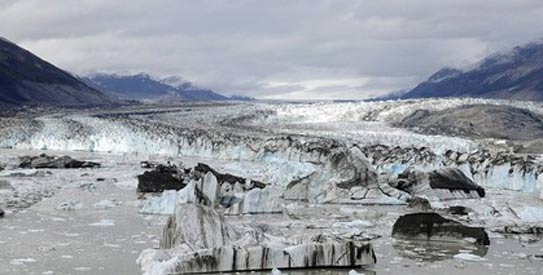
ISLAMABAD: The Abu Dhabi Dialogue Group comprising seven states sharing the rivers rising in the Greater Himalayas is expected to meet early next month to adopt a joint initiative to minimise the impact of melting of glaciers.
The group comprising Pakistan, Afghanistan, Bangladesh, Bhutan, China, India and Nepal was set up in 2006 in Abu Dhabi.
Later on, the United Kingdom, Australia and Norway joine d it to support its activities.
It would strive to achieve within 10 years a cooperative and knowledge based partnership for managing fairly and developing the Himalayan River Systems to bring prosperity, peace and social harmony and environmental sustainability from the source to the sea.
More than 1.5 billion people live in these river basins.
Almost half of the world's population lives in countries that depend to a greater or lesser extent on the economic production of these rivers.
According to an official, climate change is altering the hydrology of these basins.
Increased precipitation is predicted in the region with higher variations and extremes, resulting in enhanced flood and drought shocks.
Glacier melt appears to be accelerating and it is predicted that sea levels rise will have major impact in the delta regions.
The biggest concern, the official said, was that there was little certainty over predictions and no consensus over observed changed.
'The lack of data is so serious that there is a blank spot, meaning no data at all, in reports of the intergovernmental panel on climate change about glacier melting in the Himalayan region.' This is because there is limited density of hydro-meteorological stations, lack of regional cooperation in observation network design and management and absence of any pooling of data, knowledge and research.
Given the scale of uncertainty and unprecedented risks posed to the livelihoods and growth prospects of such a large proportion of the world's population, the absence of cooperation on the rivers of Himalayas poses a very serious challenge.
Against this background, the World Bank has started facilitating the dialogue to focus on the changing conditions in the headwaters and the pressures in the floodplains and deltas.
The group has decided to adopt a nonrepresentative and non-formal participation so as not to focus on particular rivers or disputes, no attribution and norequirement for a consensus outcome and instead focus on sharing global experience on international waters and benefit sharing for achieving constructive convergence on major issues.
Assisted by the International Centre for Integrated Mountain Development, the group has convened more than 50 leading knowledge institutions across the region to be part of the process.
At a previous session, stakeholders from the countries held discussions on preliminary design of the Ganges Strategic Basin Assessment and examples of state-of-the-art regional hydrometeorological technology.
On the advice of the World Bank, the participating countries have agreed to have a regional hydro-meteorological system to overcome shortage of reliable data and its sharing mechanism. The World Bank will provide financial support in this regard.
Officials said an informal national dialogue in Pakistan had been put into motion recently to let major policymakers and stakeholders to share information on basin management in other countries and identify areas for knowledge sharing and research cooperation with neighbouring states.