0
0

RUSSIA and its power-hungry leader Vladimir Putin are still reeling. The results of last week's parliamentary elections were a surprise, not just because of his party's low level of popularity but because they were allowed to happen.
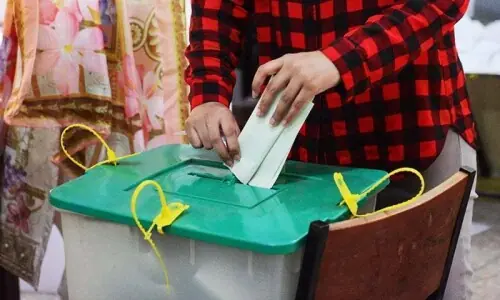
In a totally controlled system his United Russia party would have won easily. But Putin has erected a façade of nominally democratic institutions and they went out of control. While there was clearly a great deal of cheating, United Russia won less than half the votes: with the electorate expressing massive alienation from the ruling elite.How that alienation plays out in the presidential election in March is the next major issue. The protests in scores of cities on Saturday are being treated less violently by the police and more respectfully by state-controlled TV than in the past. Will Putin continue this softer approach as the March poll approaches? If he fails to get half the votes there will be a second round in which victory for him is not guaranteed, although no doubt his ballot-stuffers will work harder than last week.
The central message of last week's result is that Russia's post-Yeltsin era has ended. After the collapse in living standards and the wholesale privatisation of the 1990s under Boris Yeltsin and the political turbulence of his constant battles with the Duma, Putin emasculated parliament and returned the country to stability. Surging oil and gas prices allowed enough cash to trickle down to wages and pensions to create an illusion of creeping prosperity.
Russia now faces annual budget deficits like almost every other major economy. Findings by the respected pollsters VTsIOM in November showed 53 per cent citing low living standards as their top priority, with inflation, unemployment and poor healthcare running close behind. Nearly 40 per cent complained of bureaucracy and corruption.
After last week's election Putin and his colleagues not only have to deliver economic growth and better social services, they have to bring in the rule of law for citizens as well as for businesses. This is not quite the same as democracy and human rights, which the VTsIOM poll showed to be important for only nine per cent of respondents.
There is much facile talk that Russia needs a middle class to anchor democracy, even though there is no automatic linkage between the two. China and Singapore are prominent examples of countries with authoritarian systems and a large middle class.
Russia's trouble is the absence of law, with its clear and enforceable rules. —The Guardian, London