



 0
0

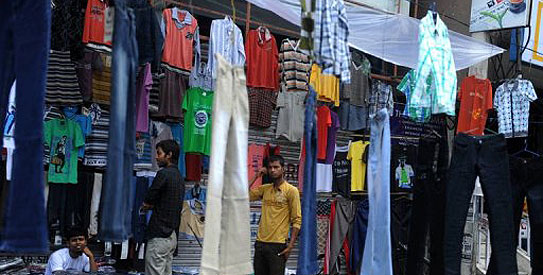
NEW DELHI: India's cabinet is to decide on Thursday whether to open the nation's vast retail sector to global supermarket chains such as Wal-Mart and Tesco in a reform that would herald a consumer revolution.
Foreign multinationals have lobbied for years to be able to sell directly to Indian customers, seeking access to a retail market estimated by global consultancy McKinsey to be worth $450 billion a year.
“If this proposal gets through, consumers will have many more choices - it will truly be a borderless world in terms of products available,” Gibson Vedamani, board member of the Retailers Association of India, told AFP.
The proposal to relax the investment retail rules was set to be discussed at a cabinet meeting at 1230 GMT, a government official said, after the finance ministry and a panel of top bureaucrats gave their consent.
Supporters also see the opening up of the retail market to foreign players as a way to increase efficiency in the food supply chain, leading to reduced prices and lower inflation, which is now close to 10 per cent.
The full-scale entry of international retail chains would revamp storage and transportation methods, reducing a chronic problem of food spoilage and ensuring fresher products are available.
Critics worry however that big, air-conditioned stores with shrink-wrapped produce will drive small players out of business, despite assurances from industry figures that the market is large enough to accommodate all players.
There are also concerns about their impact on India's hundreds of millions of farmers, given their huge buying power and record of driving down prices in the rich world.
Even if the corruption-plagued and weakened cabinet led by Congress party Prime Minister Manmohan Singh approves a change, it is likely to face a severe challenge when it reaches parliament.
The plan is “a tool to kill the domestic (retail) industry,” said Murli Manohar Joshi, a leader of the main opposition Hindu nationalist Bharatiya Janata Party (BJP).
“If foreign direct investment in the retail sector is allowed, small traders will lose their jobs as their products will not be able to compete with foreign traders.”
Multi-brand foreign groups such as US-based Wal-Mart currently operate as wholesalers in India but are prevented from selling directly to the public. The vast majority of consumers currently shop at small local markets.
The policy change would enable foreign groups to welcome the public into big stores opened via partnerships with Indian retailers, which could be up to 51 per cent foreign-owned.
The Congress-led central government may also raise the foreign investment cap to 100 percent from 51 per cent at present for single brand retail operations such as Nokia or Reebok.
India's retail chain industry, which has been pushing hard for the changes, is cheering the government on from the sidelines, anticipating lucrative tie-ups with foreign firms.
“It will enable a lot of companies to get into India,” Vedamani, of the Retailers Association of India, told AFP.
The changes would represent a huge opportunity for large foreign retailers such as Wal-Mart and France's Carrefour, faced with saturated Western markets.
To ease opposition, the cabinet was reported to be preparing to stipulate that foreign retailers must source a minimum percentage of products - expected to be around 30 per cent - from small and medium-sized Indian businesses.

























