0
0

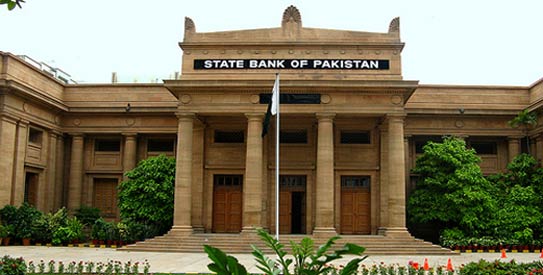
What happened to Pakistan’s economy in 2008 and the years to follow? When the new government took over, owing to global crisis and the state of affairs then, it followed a tight monetary policy by increasing the interest rate periodically up to 15 per cent by 2009.
By pursuing such a policy, the government hoped to stabilise the economy.
A high interest rate helps build foreign reserves as foreign investors want to reap higher interest rate and this in turn tends to stabilise the exchange rate. But, above all, due to slow economic activity people with extra cash tend to save more and as a result the inflation rate may be restrained. With these benefits the state also has to swallow the bitter pill of a lower GDP growth coupled with rising unemployment.
But what happened in our case? We seemed to defy the rule of economics. The following table shows some of the key indicators of the economy:
Inflation remained double digit in the face of a double digit discount rate and the rupee kept on depreciating. The downside of the tightening monetary policy however, was demonstrated by the GDP growth and unemployment indicators. The tight policy was also part and parcel of the IMF deal.
The government had hoped to keep the fiscal deficit low and finance it entirely by external source without borrowing from the State Bank and thus not injecting money into economy directly. The idea seemed appropriate to curb inflation.
But what happened that we faced a soaring rate of inflation? One reason was that the prices of food, petroleum and electricity had increased. Back in 2008, the country had to face an increasing rate of oil prices and especially if fiscal policy is not aligned with it, the food prices escalated because of floods in 2010 followed by a surge in international commodity prices.
The persistent high rate of inflation in the face of such high discount rate is a rare occurrence.
So if the issue of inflation was incurable why did the government stayed with its policy of monetary tightening. The high discount rate made borrowing highly expensive, so businesses did not expand. Slower economic growth, high inflation and rising unemployment led to severe poverty.
The problem lies in its fiscal measures. The economy suffers from a tax- to-GDP ratio of eight per cent. The efforts since the beginning had to be put on increasing the tax revenue. Not by indirect taxation which only adds to inflation but with increasing direct taxation and that too by increasing the tax base and taxing the non-taxed.
The fiscal deficit persisted and a larger chunk remained to be financed by borrowing from the State Bank. That included circular debt financed by the banking system. Such borrowings increase the injection of money into the market that gives rise to inflation.
The monetary tightening only prevailed to absorb the slippages at the fiscal side. In the last two years, there has been some improvement and the Federal Board of Revenue has been seen as taking some strict measures to improve tax collection but the process has been slow and late.
After some measures for tax collection to address the fiscal side, there has now been some periodic cuts in the discount rate to restore economic activity and address the unemployment issue. But without real tax reforms and addressing the fiscal issues effectively, it’s difficult to expect a very positive outcome.