1
1

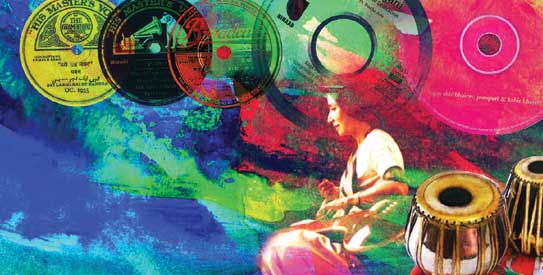
I have before me an encyclopaedia of music titled Classical Music on CDs (Compact Discs). The work shows how technology can assist in promoting and preserving aesthetic tastes of music lovers and help scholars.
I wonder if any lover of music in Pakistan or a scholar had the slightest idea of compiling such a book. Even the basic encyclopaedia discussing musical terminology, explaining acoustics and recording biographical sketches of musicians and connoisseurs is not there.
Music is the history of the human race in sound. Conscientious communities have managed to preserve their musical heritage by many means. The church music lovers in the West conserved handwritten scripts before the invention of the portable type in 1430. The first ever musical lexicography was published circa 1495. It was a compilation of Latin musical terms elaborating Latin definitions.
The Oxford Companion of Music is said to be the first encyclopaedia appearing in 1938. It does not give just lexicographical definitions of musical terms but also mentions the important musical scores of the past, important musicians, composers and old records. It gives indexing, cross references and biographical sketches.
The other important work is The International Cyclopaedia of Music and Musicians, edited by Oscar Thompson (1887-1945), first published in 1938. It is a huge work and is a compilation of musical terminology, introductory notes on world music, and biographical notes on composers and conductors. Some other encyclopaedias of music are: Grove’s Concise Dictionary of Music, by Sir George Grove. Its original work is spread over 20 volumes. The present work is a concise form appearing in 1988.
Larouse Encyclopaedia of Music, edited by Geoffrey Hindley, Harrap’s Illustrated Dictionary of Music and Musicians, Bloomsbury Dictionary of Music, The MacMillan Encyclopaedia of Music and Musicians, etc.The cyclopaedias and dictionaries of music and musicians have been there for four centuries, some even dealing with special subjects and sections. One such remarkable dictionary is The Heritage Encyclopaedia of Band Music.
Keeping cyber progress in mind a group of music lovers and publishers have launched the Garland Encyclopaedia of World Music online. This is the first ever online music facility devoted to music lovers and scholars alike. It has a stock of some 10,000 pages that can serve the needs of knowledge seekers. A new net window has also been added for the use of those who listen or record music on the Net.
Music lovers, students and scholars in Pakistan have yet to see such works. Our neighbouring country has made some efforts. It began with some small articles and essays scattered all over the country but no effort to make the knowledge available at one place. In 1995 Penguin, India, came out with a small but basic dictionary of Indian classical music terminology.
The Oxford University Press planned an encyclopaedia of the music of India, with the support of Sangit Mahabharati, which began its work in 1956. When completed it was spread over 1,800 large-size pages with almost 5,000 entries. It has music terms defined, application of notes and improvisations and finally biographical sketches of the maestros. In 2009 the publishers announced that it had begun digitalising the encyclopaedia.
Pakistan is one of the centres of ancient civilisations, yet we have not taken up the task of exploring our cultural roots. Crosscurrents of history have exposed this land to many cultures with the result that today Pakistan has become a crucible of cultures. They all have their distinctive heritage, music, dance and drama. Besides the mainstream culture, Pakistan is home to 36 cultures with their roots deep in the past.
Individual efforts have been made to highlight various aspects of Pakistani music, however, there is a need to make concerted efforts to preserve the musical heritage along with recording the intricacies our music heritage possesses. For this the country has many a connoisseur who maintains rich sound and data libraries which can serve as source material.
Besides, Radio Pakistan and Pakistan Television also have sound libraries.
Since we do not have staff notations to record the compositions, bold efforts need to be made along the lines of previous scholars, describing the broad outlines of the music recorded. Today is the time to make full use of the expertise available and the advanced technology. Better late than never.
shaikhaziz38@gmail.com