0
0

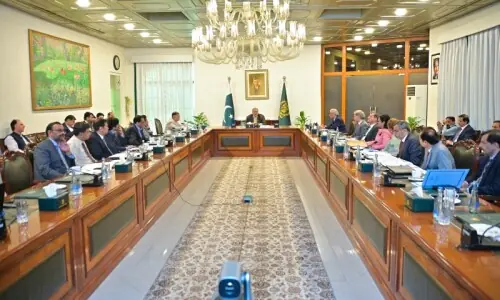
ISLAMABAD, Nov 14: The Economic Coordination Committee of the Cabinet (ECC) here on Thursday decided to introduce gas management programme during the current financial year.
The ECC, which was presided over by Finance Minister Shaukat Aziz, noted that in winter consumption of gas increased from 2.5 to three times more than the normal summer gas demand.
The Ministry of Petroleum & Natural Resources has, therefore, planned gas demand/supply management programme to meet the increasing demand of gas in the ensuing winter. Under this arrangement gas supply to the domestic/commercial sector would be ensured. Besides, attempts will be made to ensure continuous supply of gas to the industrial sector. The fertilizer units will be supplied with gas as per their normal requirement, except in January, when the units will be closed down for their annual maintenance.
The government has augmented gas infrastructure of the both utility companies to handle additional one bcfd of gas, keeping in view the estimated availability of gas from new discoveries. Out of this, 250 mmcfd gas is already available, whereas additional 215 mmcfd gas would be available from Bhit field in February-March 2003 onwards. Besides, around 600 mmcfd gas would be supplied from other new sources by December 2003. Therefore, there would be no requirement for load management in the next winter and thereafter. The programme would ensure gas supply to the consumers, especially in the extreme winter in the north of Pakistan.
Due to the increased consumption of gas for heating purposes in winter, the shortfall is proposed to be met by curtailing gas supply to major power cement and fertilizer plants. Under the programme the supply of gas to cement plants would be curtailed. SSGCL will surrender 50 mmcfd to SNGPL system in January 2003 and 90-100 mmsfd in February 2003. This swap arrangement would enable to meet shortfall on SNPGL system in winters. Further, any additional shortfall will be met by curtailing supply to industrial units to ensure continued uninterrupted gas supply to domestic consumers.
PRGF: The ECC also reviewed three-year Poverty Reduction and Growth Facility (PRGF) programme with the IMF which would mature in December 2004. The $1.3 billion PRGF programme negotiated with the IMF at nominal service charges of 0.5 per cent to be paid in 10 years with the grace period of five-and-a-half years is on the track.
CNG KITS: To offset import of oil, encourage environmental-friendly cheap and accessible transport and to promote investment, it was decided to extend exemption from customs duty and sales tax on CNG kits and cylinders up to June 2004 as provided in SRO 38(1)/98. A custom duty at the rate of 5 per cent will be levied on import of CNG compressors/machinery.
The meeting noted with satisfaction that the Pakistan has become a wheat exporting country. So far, Pakistan has exported 1.171 million tons of wheat, and in the current wheat year 0.77 million tons have been exported. The stocks of essential items such as oil, fertilizer, wheat and sugar were found comfortable and in abundance.
LPG SUPPLY: The ECC also reviewed liquefied petroleum gas stocks. The ECC noted that the demand of LPG is likely to increase in winter and during Ramazan. It noted that supply of LPG which had reduced due to maintenance work at two refineries is now returning to normal levels.
ESSENTIAL ITEMS: The ECC meeting reviewed prices of essential items and noted that average prices of tomatoes decreased by 31.12 per cent, potatoes 17.66 per cent and mash pulse (washed) 7.38 per cent as compared to the corresponding period of last year. Keeping in view the increased demand of consumers goods during Ramazan, the ECC directed Planning Division to coordinate with the provincial governments to keep the prices under check.
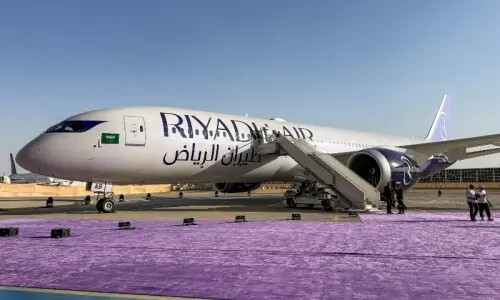
LOAN FOR PIA: To make Pakistan International Airlines a vibrant and economically competitive airline to meet future challenges, the Economic Coordination Committee approved $335.9 million raising of loan through US Exim Bank guaranteed by the government subject to the conditions that PIA would obtain prior to clearance of the terms of loan from the Finance Division. This loan would facilitate PIA to acquire three aircraft to be delivered in 2004.
To make provinces effective drivers and catalysts for attracting investment in power generation, the ECC modified power generation policy 2002, and increased capacity from 20 to 50 megawatt for power generation stations to be handled by the provinces.
To provide consumers items on competitive prices to the consumers and to keep their prices in check in the market, the ECC decided to revive welfare facilities provided by the Utility Stores Corporation of Pakistan Limited.
The meting inter alia decided that:
i) the Finance Division may negotiate with Habib Bank Limited for final settlements of their loan amount by repaying principle amount in two equal annual instalment.
The first instalment will be paid by the Ministry of Finance and the second instalment by the USC;
ii) Finance Division will provide Rs150 million in October 2002 to USC to enable it to provide for the Ramazan package;
iii) another amount of Rs150 million can be provided in the third quarter of current financial year subject to satisfactory performance of Utility Stores Corporation of Pakistan Limited during second quarter of financial year 2002-03; and
iv) the entire situation may be reviewed in the first quarter of the next financial year i.e. 2003-04 and the decision may be taken about the future of Utility Stores Corporation on the basis of its performance.