



 0
0

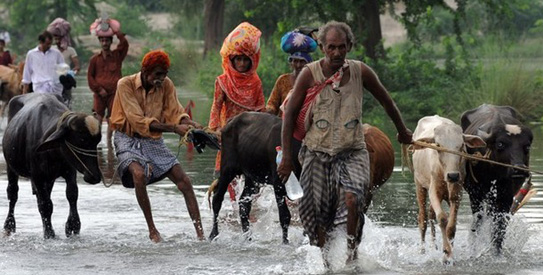
ISLAMABAD: Pakistan’s economy is considered to have suffered a 0.5 per cent loss to the estimated 4.2 per cent growth rate during the current financial year because of floods in Sindh, according to a senior official of the Ministry of Finance.
“Floods are estimated to have affected about half a per cent of GDP (gross domestic product) growth rate, but this needs to be verified,” he said during a background briefing here on Wednesday.
He told reporters the government was working on ‘back-up arrangement’ to raise funds by pledging national assets like the Islamabad-Lahore Motorway either by issuing Islamic Sukuk bonds in the national market or through domestic Sukuk bonds because floating $500 million exchangeable bonds in the global market or other such international transaction was currently out of question in view of the global debt crisis.
He explained that an earlier international Sukuk raised by pledging the motorway had matured and the asset was now free from any legal encumbrance. Some international investors who had invested in Sukuk have expressed interest in fresh Islamic bonds, but the option was at a ‘very nascent stage’.
The government expects to be paid $800 million withheld since 2008 by UAE’s Etisalat against sale proceeds of Pakistan Telecommunication Company Limited. “We are hopeful this will materialise this year.”
The finance ministry was “exploring new avenues” of raising funds by pledging the motorway.
Finance Minister Dr Hafeez Shaikh will hold consultations with “key international financial institutions in Karachi” soon on ways of tapping foreign resources.
The official said national economy faced a number of difficulties. “We remain in a difficult situation, but within manageable limits.” Similar economies across the globe, he said, faced situations which were worse than what Pakistan was facing today.
He said the impact of floods on the GDP growth rate would over and above the pressure of managing the infrastructure and improving public services, particularly power sector management. Therefore, the stress will be on austerity and power sector management, along with reforms and improved governance.
On the positive side, he said, the government expected that it might not need to import sugar after the domestic industry reported production of up to 5 million tons this season which was an achievement.
Also, the government is expecting credit from the Islamic Development Bank for project financing and commitments from Saudi Business Development Fund to facilitate urea imports. “There are sufficient inflows in the pipeline as exports increased by 17.2 per cent to $6 billion in the first quarter of the current year compared with the same period last year.” The remittances have increased by 22 per cent to $3.3 billion while tax revenue has gone up by 28 per cent to Rs376 billion from Rs293 billion collected in the same period last year.
He said the government had curtailed expenditures by spending Rs60 billion less than the Rs574 billion earmarked for the first quarter.
He said the current year would be one of ‘consolidation’ and the challenge for the managers would be to convince the global economic players that “worst is over” in Pakistan and manage the bad perception abroad. The effort has already shown results as the government remains engaged with the International Monetary Fund without a negative fallout of unsuccessful conclusion of its programme.
Asked as to why tax-to-GDP ratio had again plummeted despite full focus on tax reforms and a last quarter additional taxation measures, the official said: “It was a historical failure of the political leadership to waste 6-8 months in pursuing integrated value-added tax followed by reformed general sales tax without legislating tax reforms.”
However, he said it had to be kept in mind the nature of coalition government and five different governments (the federal and four provincial) who had the collective responsibility and role to pay in increasing the tax-to-GDP ratio. This political arrangement has led to non-inclusion of a large part of economy under the tax net and resistance to taxes on the agriculture sector.



























