0
0

RIYADH, Nov 10: Saudi Arabia’s Shura council has held a rare debate with the country’s rulers about how to “activate” the advisory body and expand its powers.
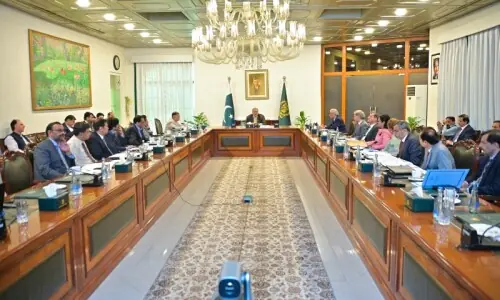
The debate, held on Saturday night behind closed doors with Defence Minister Prince Sultan bin Abdul Aziz, tackled improving the council’s supervision of state departments and allowing it to play a bigger role in developing laws.
The meeting came at the initiative of the Shura, or parliament, which was set up in 1993, with 60 members appointed by King Fahd. Membership was increased to 90 in the second term in 1997 and to 120 last year.
Council speaker Sheikh Saleh bin Humayed said the body was looking for more “powers” to be more effective.
“The Council represents a cornerstone in the development process of the country in the planning, organizational and supervisory aspects,” Sheikh Saleh, a former imam, said.
The council is “looking for more improvement through hoping and asking for more authority in order to be in line with developments and more effective in building the nation”, he added.
Humayed emphasized the Council’s role in frankly debating all issues concerning the oil-rich kingdom.
Prince Sultan, who is third in the ruling Al-Saud hierarchy after ailing King Fahd and de facto ruler Crown Prince Abdullah, told the Council he would report all remarks to Prince Abdullah.
Okaz newspaper quoted Sultan as telling the members that “you monitor all of us and the Council’s supervisory role over state agencies is undisputable”.
The all-male council has only advisory powers and does not legislate, but its role has been boosted in the past few years as it passed a number of important bills in the economic, social, educational and other domain.
Under Saudi law, the council’s decisions are not binding on the government, but as it works closely with the cabinet, its decisions are normally endorsed and implemented.
In practice, the council debates bills normally proposed by government departments, sometimes introducing minor amendments and voting them into law.
The council has contributed to reforming the justice system by passing three laws.—AFP