



 4
4

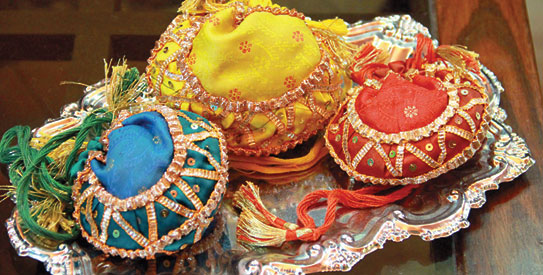
It could easily be a scene from an A.R. Khatoon novel: young girls engrossed in the all-absorbing task of dressing up. There are bangles to match with the shalwar kameez or ghararas, mehndi to apply on hands and feet, gota to stitch on brightly coloured dupattas, and of course, matching chappals to take care of.
In another part of the house, a few older women are busy preparing traditional culinary delights and siwayyan (vermicelli) for the guests who will begin to arrive early next day. Homes everywhere are being spotlessly cleaned and decorated as nanis, daadis and ammas cast a critical eye to ensure that absolutely nothing goes amiss.
Such was the eve of Eid, some 50 to 60 years ago.
“In those days, we would all gather on the roof on chaand raat, and be able to spot the anxiously-awaited crescent with naked eye,” recalls Zubeida Tariq who lived in Delhi Colony then, “I remember how we would come running down the stairs only to find out that preparations for the next day were already in progress and someone would be washing the red brick floor of the house.”
Back in the 1940s and 1950s, Eid was the most-anticipated affair, for it brought something to look forward to for both young and the old. Preparations would begin days in advance, what with the houses painted, furniture polished and cutlery sparkled to perfection.
“A few days before Eid, the choone wala would be employed to paint our home, and a qalai wala would be called to polish the crockery,” reminiscences Mrs Mushtaq of the Eid she celebrated in Badayoon, India, in the mid-40s. “Kids today have probably not even heard of copper cutlery, but that’s what we used in those days, and it had to be its sparkling best for the festival. We would also bring home ghare matke (small matkas) and wrap them up in a red cloth.”
With no tailors to run to in those days, clothes were stitched at home either by the women of the house, or by ‘mughlaniyan’— the old-fashioned version of tailors. Fabric was bought weeks earlier — mostly silks, satin and cotton — and the houses would then resonate with the whirring sound of sewing machines and needles would flash as one dress after another was completed.
“Once, someone stole my kameez on chaand raat, and I did not have anything new to wear on Eid,” relates Mrs Mushtaq, “so on Eid day itself, mughlaniyan were called to quickly put together another kameez, and though the result was not quite the same, at least I was wearing a new shirt.”
Even though there were no shopping centres to browse through endless fineries, the ladies of the house were not deprived.
Come chaand raat, and the choori wali would amble in with her wares — a cornucopia of dazzling colours piled in a basket.
“We lived in a colony, and the girls used to gather at one place for last-minute preparations. When the choori wali would come, we would buy bangles to match our outfits and then compare who had bought what,” remembers Sanober Bano who lived on Frere Road during the 1950s, “everything from the size to colour was inspected in great detail.”
“I remember how we would neatly fold our outfits and keep them under our pillows so that they would give an ironed look,” says Mrs Tariq; there was little chance of actually ironing them. “We would also stay up late into the night and play games like pittoo; boys would often stay up all night.”
The real fun of Eid was always the eve, which most people, especially women, spent in putting final touches to their outfit, matching accessories, and more importantly, applying mehndi. In those days, there was no concept of ‘cone’ mehndi, so the maalan (gardener) was given the responsibility of making mehndi by crushing henna leaves. From little girls to the older lot, all would then apply the paste on their hands and then wrap a paan leaf around their palms to protect the colour.
“Since we were very young we were not allowed to wear mehndi on our feet, so we devised another way to colour them,” laughs Mrs Mushtaq, “We would deliberately wet our feet before slipping them into our velvet-soled chappals — the top embellished with salma sitaray — so that the colour of the red velvet would rub off on the soles of our feet.”
Kitchens, on the eve of Eid were any gourmet’s heaven. Besides the regular traditional fare, it would emit tantalising aroma of Eid-related sweets.
“One of my favourite memories of Eid is how we would stay up all night and prepare a number of sweets including our speciality, takhte ki siwayyan,” recalls Mrs Amat-u-Zahra who is from South India, “But for us the highlight was to apply itr (rose water) on our father as he got dressed in his sherwani for Eid prayers.”
When the curtain rose on Eid day, men would head for prayers early, while houses buzzed with typical culinary activity associated with the festival. Dastarkhwans — there was little concept of dining tables — would spill over with all sorts of traditional foods. From kachori to pulao and qorma, to kachay gosht ki biryani, to shami kebab, seekh kebab and sheer khurma, the food would become never-ending manna for the guests who visited all day long.
“We used to be so excited about our new clothes that sometimes we couldn’t even sleep at night,” reminiscences Mrs Shakera, “as soon as we would be up, we would quickly dress, and head to the Eid-gah with the men in our family. We were very young at that time, so we were allowed to go.
“Our house was designed in such a way that four houses were built together and all opened into a large daalaan (compound). If it rained on Eid day, young girls would hang jhoolay (swings) in the compound and there would be songs and laughter to complement the weather.”
The elders would be in their element that day. Reclining on a takht, with their glistening paandaans sitting next to them, they would greet guests, and accept Eid greetings from family and domestic staff.
A lot may have changed since then, but not the pull of Eidi, which still remains the younger lot’s primary interest. Back in the ’40s and the ’50s, an athanni (50 paisa) was sufficient for a day out at a mela, and if someone managed to collect more than 10 rupees, s/he was considered ‘loaded’ by their peers.
“My total Eidi used to be around five rupees and mom would give us 25 paisa each out of that,” says Sanober Bano, “With that amount, we would have fun at the swings that were specially put up on Eid day in a ground across our house.”
With changing times Eid today is more about beauty salons, bakery cakes and boutique outfits but somewhere, deep down, the festival still evokes the glory of a past era. Eid Mubarak, one and all.



























