0
0

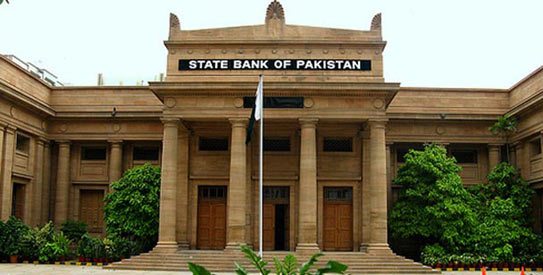
KARACHI: The State Bank on Friday injected a huge amount of Rs90 billion into the banking system, providing temporary liquidity as withdrawals and investment activities have geared up to avoid Zakat deduction in Ramazan.
The State Bank conducted reverse Repo to inject liquidity into the banking system and offered Rs157 billion against treasury bills and Pakistan Investment Bonds.
Detail shows that banks accepted Rs90 billion for seven days at a rate of return of 13.45 per cent.
Bankers said the market is short of liquidity which has several reasons, including government tax on banks. They said this tax used to come into the system the other way.
Bankers said withdrawals are being made to avoid Zakat deduction as many account-holders do not submit affidavits to stop Zakat deductions.
“But the major reason is that fund managing companies which are looking to invest their liquidity are avoiding Zakat deduction,” said a senior banker.
Bankers had no idea of how much money was withdrawn since the beginning of the new fiscal year on July 1, but they said banks were short of liquidity.
Money market experts said overseas Pakistanis sent $11.2 billion during the fiscal year 2011 which created a huge liquidity in the market and improved deposits of banks.
However, banks thirst for government papers led to outflow of liquidity from the system while the government itself did not spare any borrowing option.
A senior Islamic banker said the government provided Sukuk Islamic bonds to raise the left-over liquidity in the Islamic banks. Islamic banks are also reluctant to extend loans to the private sector and are demanding Sukuk for their investment.
They also fear risk as it is high due to over 13 per cent inflation and 14 per cent interest rate.
The higher interest rate has resulted in the collapse of many businesses as it accumulated non-performing loans (NPLs) of over Rs550 billion in the conventional banking.
Bankers said the State Bank would have to inject more liquidity in the banking system during Ramazan when huge withdrawals are expected.
If government continues to borrow from banks, the banking system would remain dry and the State Bank would have to inject more liquidity for smooth running of the banking system.
Banks have invested over 80 per cent of their liquidity in government papers which yielded good profit for banks, but deprived the private sector of cheaper money at competitive rates from banks.
During the last three to four years, banks have focused on investment in government papers which hit the economic cycle of producing goods, creating wealth and improving the overall liquidity in the banking system.