2
2

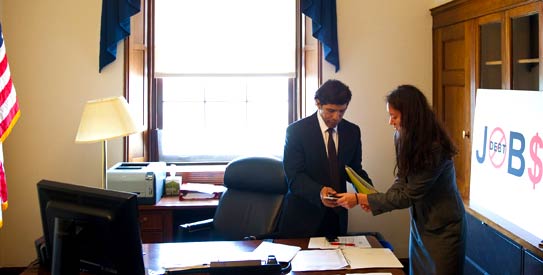
WASHINGTON: Hansen Clarke made history as the first member of the US Congress of Bangladeshi descent but when he goes to the airport, he still feels that he is singled out with suspicion.
“If I don’t shave for a few days and I wear my hoodie on, or I’m in the airport and I have my jogging clothes on - oh yeah, I get subjected to the random explosive tests almost every time,” Clarke said.
Since entering Congress in January, the Detroit-based congressman has made it his mission to try to stop racial profiling in the United States, using his position as a member of the House Committee on Homeland Security.
The 54-year-old comes to the issue from a unique dual vantage point. His mother was African American, a community that has long protested against racial profiling by law enforcement.
“After 9/11, South Asians had some experience of what African Americans have had to go through for centuries here,” Clarke, his voice animated, told AFP in an interview in his office.
“I’m aware of, too, the threat against our country,” he said. “When you profile somebody, that’s not effective because you’re devoting attention and resources toward a group of people who probably more than likely are not a threat.” Clarke’s district - Michigan’s 13th - is majority African American and a stronghold of the Democratic Party, with President Barack Obama winning some 85 per cent of the vote in 2008. Clarke ousted a Democratic incumbent, Carolyn Cheeks Kilpatrick, in a primary election last year.
Clarke sees himself both as South Asian and African American; he takes his surname from his mother, who was a guard at a crossing for schoolchildren.
Making his background even more diverse, Clarke’s wife is of Korean ancestry.
And Clarke views his heritage more as South Asian than just Bangladeshi, noting that his father was born before the subcontinent was partitioned in 1947 and Bangladesh subsequently won independence from Pakistan in 1971.
“My dad died before there was ever a Bangladesh created. He always considered himself an Indian,” Clarke said, recalling his father hung on the wall a picture of an event in support of freedom from Britain.
His father, Mozaffar Ali Hashim, worked at a foundry of Ford Motor Company. Alarmed by Detroit’s troubles, he planned to move his family to East Bengal but developed heart problems and died when the future congressman was eight years old.
“He spent all of his time with me because I think he knew he was going to die prematurely,” Clarke said. “He had a huge impact on me.” Clarke also has an ecumenical approach to religion. He said he would attend a mosque as a child but later came to consider himself a Roman Catholic and contemplated the priesthood when he was in his early 20s.
“My father was an extraordinary respectful, loving, kind, gentle human being, but he was that way because of his faith - because of his faith,” Clarke said, repeating his words for emphasis.
“Yes, I hold a different tradition in one respect but I also wanted to be a priest because I wanted to emulate my dad,” he said.
Clarke is an accomplished painter and studied art in university, aspiring to work in galleries before he became interested in politics. He served for eight years in the Michigan state Senate.
In Washington, Clarke said he hoped to work to give his constituents the same opportunities he has enjoyed. Besides the profiling issue, Clarke has prioritized economic development and proposed withdrawing troops from Afghanistan to redirect the money at home.
Clarke did not visit Bangladesh until several years ago but once there, he found an emotional bond. He said he was greeted by around 1,000 people in his father’s hometown of Beanibazar and learned, to his surprise, that his dad once ran a local shop selling wedding gowns which remains profitable.
“As the guy who spent years living absolutely all alone - my parents dead, no brothers or sisters, no grandparents - I felt sometimes I was alone and I had to tough it out. To see this huge family there was just extraordinary,” Clarke said.
“If you think about it, I’m considered a relatively modern, urban congressman in this country, but yet my roots go back to a culture 100 years old in unified India.”