0
0

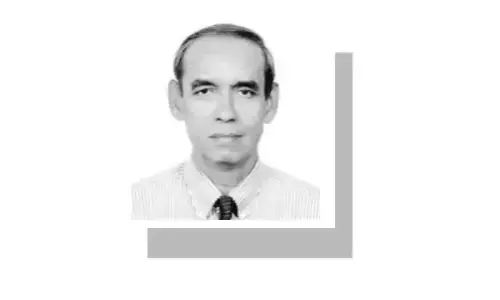
Ali Usman Qasmi is a Newton Fellow in the History Department of the Royal Holloway College, University of London. A PhD holder from the University of Heidelberg (2009), he has published a series of articles in Modern Asian Studies, The Muslim World and The Oxford Journal of Islamic Studies. He is also one of the editors of a book Revisioning Iqbal while his doctoral dissertation will also be published in book form shortly.
A book lover from his early days, Qasmi inherited the love for the printed word from his father, Ata ul Haq Qasmi, a leading humorist of Urdu. They had a large collection of books at home.
However, it was at Government College University, Lahore, that Qasmi first came into contact with Dr Tahir Kamran, who encouraged him to join the academia. “While the college had lost much of its intellectual charm due to the muzzling of individual freedom in the name of discipline by the college administration, there was still the fortunate presence of a genuine scholar like Dr Tahir Kamran at the history department. He patronised and inspired me to take up academics as a career,” he remembers.
Qasmi finds himself in a country where the discipline of history was never allowed to flourish due to the repressive policies of the state. He blames those at the helm of affairs for this.
“There was a time when Pakistan had its share of excellent historians trained in the tradition of the Aligarh School of History for medieval India. They, however, did not pass on their craft to the succeeding generation. May be it was because of the fact that studying history in a country, where the Two-Nation Theory alone was to serve as a rationale for complex historical dynamics of this region, was futile.
“We have reached a stage where there are no qualified historians to teach history nor is there any interest on the part of the students and intelligentsia in the critical understanding of history. Only recently, there have been some encouraging developments. Institutions such as LUMS and BNU are offering degree programmes in liberal arts for which they are hiring the services of qualified staff from abroad.”
The muzzling of liberal voices by the state has created very serious problems for all research scholars in Pakistan. With hardly any possibility of churning out objective research, the academics find themselves in a real quandary. Qasmi agrees with sociologist/historian Ayesha Jalal, who says that Pakistan has been an intellectual wasteland as it did not allow space for any alternative discourse to develop.
“The most unfortunate aspect of the state policy from the beginning was to suppress the leftist movements. Instead of allowing them to play a constructive part in developing an egalitarian and progressive society in the country, the repressive measures of the state forced them to convert into ethno-nationalist movements concerned about the interests of their respective ethnic groups. The result is that we are hardly left with any serious intellectuals of international repute,” he regrets.
Not satisfied with the curriculum of history being taught here, he calls for revising it as he wants the students here to train in the discipline by developing various course modules with a special emphasis on recent theoretical debates in historiography.
Therefore he, along with his colleague Hussain Ahmad Khan, plans to set up an autonomous school for historical studies here, which he believes can be an ideal platform for budding scholars.