0
0

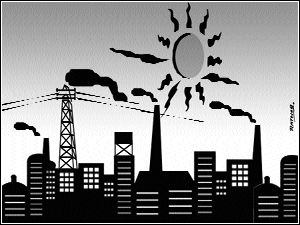 God has gifted Pakistan with huge reserves of coal which according to an estimate, are exceeding 90 billion tons sufficient to generate 60,000 mw of energy over 100 years, but these reserves have not been harnessed as yet. The hydro potential is estimated at about 30,000 mw (34 million ton oil equvalent, MTOE) out of which 4800 mw has been developed over the past 50 years and the remaining has yet to be exploited.
Pakistan is presently meeting 10 per cent of its total energy requirements from firewood. There is a great potential to increase our forests reserves if the afforestation programme is organized on scientific and commercial basis.
The total reserves of gas presently available are 38.0 trillion cubic feet (738 MTOE), which are likely to be depleted within next 25 years assuming the present rate of consumption and growth rate. The proven oil reserves are very limited and hardly sufficient to meet our two years’ requirement if exploited in toto. Wind energy resources are available along coastal line in Balochistan which also need to be exploited.
Nuclear energy can also play a vital role in balancing energy deficits, but development is limited due to technological problems and international restrictions.
These are the total conventional energy resources in Pakistan which even have not been exploited to their full potential for one or the other reason. With the depleting fossil fuel reserves renewable energy technologies such as solar, hydrogen, geothermal, etc. are expected to make growing contribution to substitute them. Having reviewed the energy resources available, let us work out energy requirements for the future.
For the assessment of future energy requirements it is essential to fix certain targets following practical example of some developed or developing countries. In this case, initially a trial was made to follow South Korean growth rates and found it impracticable to achieve the targets in Pakistan due to large gap between available energy resources, low potential for research and development, prevailing political, and socio-economic conditions. South Korea’s GDP increased at an average growth rate of 9 per cent from the year 1960 to 1990 which later was reduced to 6-7 per cent. The present plan is worked out by reducing it to 40 per cent of South Korea energy requirements i.e. what South Korea achieved in 20 years, Pakistan should do the same in 50 years. Apparently this is not an ambitious targets by any means.
The GDP and energy per capita growth rate of some of the developed and developing countries were studies which over the periods show a decreasing trend. As requirements are compounded and base broadened, the targets on the same percentage basis becomes difficult to achieve. Following the same decreasing trend and based on today’s energy consumption, the requirements for the year 2050 are tabulated: (Table 1)
Our today’s requirement of energy is 60 MTOE which by above assumed growth rate works out to 538 MTOE by the year 2050. From the above table the energy per capita would increase from 526 KGOE to 1220 KGOE with normal population growth rate and to 2270 kilogram oil equivalent(KGOE) with controlled population growth rate by the year 2050.
Now ponder for a while over the graph wherein 35 MTOE have been tapped from hydel sources provided we harness total potential by constructing Kalabagh, Basha, Bunji, Thakot Dams and other small hydels stations. Gas reserves according to the present proven estimates will be depleted by the year 2030 and we have to depend upon available coal reserves, which can supply us energy of about 100 MTOE for a sufficient long period, which are yet to be exploited. Another major indigenous source of energy is wood, provided afforestation programme is run on a scientific and organized manner.
Still we shall be facing a shortfall of 65 per cent of energy i.e. 333 MTOE, which has to be met from non-conventional energy resources. Pakistan energy situation will enter a crucial stage with the passage of time if available indigenous resources, i.e. hydel potential and coal reserves, are not harnessed well in time and non-conventional energy sources are not developed. The gap between energy demand and supply will start widening and by the year 2050 we shall hardly be meeting 30 per cent of the projected demand if we continued our development on the same pace as we did in the past. Even the present policy of the GOP is not catering to meet any of the above stated targets. Some one might be thinking that envisaged targets are perhaps ambitious, but in fact, they are hardly sufficient to pull out our 35 per cent population living below poverty lined and may increase our per capita income from $470 to $2500 provided population growth rate is controlled and brought to zero by the year 2050.
The economic growth remained sluggish over the last three decades. What ever economic progress we made was absorbed in devolution of currency, population growth and inflation thus increasing the basic poverty level from 20 to 35 per cent. To assess the situation correctly, let us look at the GDP growth rate of Pakistan, South Korea and the USA over the past two decades. (Table 2)
It may be pertinent to note that GDP per capita of South Korea was less than Pakistan in the year 1960 which has risen to $6000 today compared to Pakistan’s GDP/capita of $405. Our exports today are $9.1 billions compared to South Korean exports of $172 billions, which by any stretch of imagination is not an enviable achievement, still our rulers had been making tall claims and beating trumpets of their successes. Evidentially they had a short vision regarding development and economy of the country. One may realize that target proposed for the year 2050 is hardly a fraction of what USA and S. Korea have achieved over the same period, and is evidently achievable provided we proceed in a planned manner and fix our target based on GDP/capita to improve our socio-economic conditions. Otherwise we will bring more poverty to our country by bringing 80 per cent people under this net within a short span of time and then the situation will not be controllable.
We are just toeing the polices of the IMF for poverty alleviation and social action programmes, which are not only short term measures but also non-productive and under no circumstances will result in sustainable economic growth. We are a poor nation of 140 million people and can not afford non-productive investments. We must initially spend every penny where there is a reasonable return to make GOP investments sustainable. In short if we have to progress we must think of changing our priorities and develop our energy and mineral resources in line with the proposed targets of GDP/capita with minimum growth rate of 6.5 per cent per annum. Achievement of higher energy and GDP growth rates, demands change in investment priorities which should be set as under:
* Top priority should be given to export oriented industrial growth particularly value added goods of electronic, engineering, chemical, food processing and IT (hardware and soft-wares) products. Electronic and IT industry can play a leading role for generating export earnings increasing GDP substantially. We must restore confidence of local and foreign investors by having consistency in our policies.
Unfortunately, Pakistan’s industry is a victim of low productivity, poor quality, over-regulations, inefficient infrastructure, political instability, insecurity, higher cost of energy and unbearable rate of interest on credits etc. All these problems need to be addressed. The GOP must remove all bottlenecks for smooth operation of the industry and provide conducive, enabling environment for development and growth of the industrial sector, particularly export-oriented industry should be given credits at a very low rate i.e. not more than 6 per cent interest for its survival under the prevailing WTO and globalization scenarios. S. Korea did the same and its major share comes from export-oriented industry.
* There is a vast margin for improvement in our agriculture outputs, which can substantially be raised in a short span of time provided GOP streamlines its policies to encourage and assist agriculturists with reasonable returns on their investments. GOP must control rising prices of agriculture inputs, improve management for marketing of farm products and implement national drainage programme to encourage increase in agriculture growth. This will have a great impact to improve socio-economic conditions on our rural population.
* Exploration and development of indigenous energy resources and minerals including construction of large hydro-dams and development of coal fields.
* Afforestation and livestock expansion be made as national policy to increase non-commercial resources of energy.
* Primary and secondary education should be given its due priority, which will help to improve quality production.
* Population growth rate to be checked and brought to 0 per cent as early as possible.
* Research and development of renewable energy be intensified for solar and wind energies to secure our future.
After reviewing the energy resources available, present energy profile, future energy requirements and effect of energy over social and economic structure of an economy, it has become clear that there is much to be desired and implemented.The government has to streamline and channelize the policies for healthy growth and proper development of its economy by directing all its feasible resources for export-oriented industrial growth particularly value added goods of electronic, engineering, chemical and IT, followed by development of agriculture and other sectors.