0
0

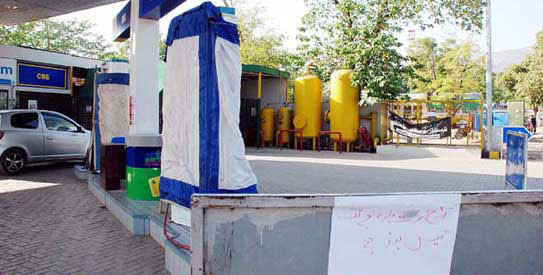
ISLAMABAD: With central Punjab and the entire northern region facing a shortage of petrol, the government ordered on Thursday that the closure of CNG stations be reduced to one day from two days a week to ease the difficulties faced by people.
At the same time, the prime minister tried to persuade directors of the Pak-Arab Refinery to move ahead with their investment plans.
According to sources, the shortage of petroleum products has been caused by the circular debt problem and resultant less capacity utilisation by refineries, deregulation of oil pricing that has annoyed the Parco management that fixed higher prices for a couple of days and violation of rules for maintaining mandatory oil stocks by the marketing companies.
The situation went out of control when Attock Refinery closed its plants for annual maintenance and government agencies and regulators failed to foresee the situation.
Talking to reporters, Petroleum Secretary Ejaz Chaudhry said although the shortage of natural gas was still there, the government had decided to stop supplies to CNG stations only for one day a week in the affected areas. He said there would be no gas holiday on Friday in the Potohar region.
He said that fuel situations in Islamabad and Rawalpindi were functioning normally and in two-three days the shortage in central Punjab, Azad Kashmir, Gilgit-Baltistan and parts of Khyber Pakhtunkhwa would be overcome.
Another official, however, said that it would take about five weeks for the situation to become normal after the ARL would resume production on July 5.
He said two teams comprising officials of the petroleum ministry, Oil and Gas Regulatory Authority and oil companies had reported on Thursday that there was 35-40 per cent shortage in central Punjab and minor shortages in Rawalpindi and Islamabad.
He said a ship carrying about 35,000 tons of petrol would reach Karachi on Friday and another 150,000 tons by June 16.
Meanwhile, the petroleum secretary and a Parco director met Prime Minister Yousuf Raza Gilani to discuss concerns of the refinery's management over deregulation of oil pricing that had reduced its profitability by about Rs5 billion a year.
Although Parco's agreement for guaranteed 25 per cent rate of return expired in 2008, it kept enjoying the benefits in the absence of deregulation. The decision to deregulate petroleum prices on May 31 annoyed the Parco management, although it is 60 per cent owned by the government.
Relatively high prices fixed by Parco hampered smooth purchases by marketing companies, causing the shortage in central Punjab that is fed through the refinery.
According to an official statement, the prime minister asked the ministry to expeditiously follow a proposed plan for setting up a power plant at Parco refinery in Muzaffargarh and immediately finalise a plan to set up the Khalifa Coastal Refinery that has been delayed for over five years.
He asked the petroleum secretary to take immediate measure to improve supplies and instruct the Attock Oil Refinery to urgently remove the technical fault that had caused the shortage in some areas of Punjab and Sindh.
The official said the petrol crisis would be resolved in two days as orders had been placed to import about 190,000 tons of oil by June 27.
He said the crisis had been triggered mainly by faults in the platform of Attock Refinery which provided POL to the north and other faults in Pakistan Refinery.
He said some OMCs had flouted the terms and conditions about maintaining strategic stocks. He said Ogra was responsible for monitoring the stocks.
Mr Chaudhry said circular debt was one of the reasons for OMCs' failure to maintain stocks and refineries' inability to utilise more than 65 per cent of their production capacity.
After the crisis broke out, the government persuaded the refineries to increase their capacity utilisation to 88 per cent.