



 0
0

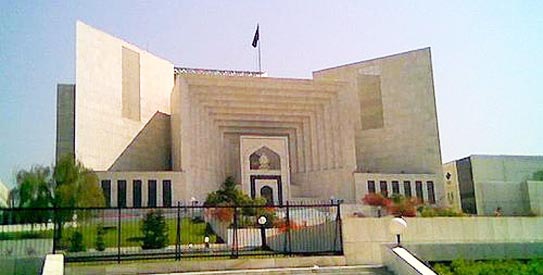
ISLAMABAD: The Supreme Court ruled on Friday that Parliamentary Committee's action of overruling a nominee of Judicial Commission for appointment as superior court judge without its own reasons would be considered “unreasoned and arbitrary”.
“If in future the committee (PC) decides to subordinate itself to the opinion of one member of the commission (JC), it must, under accepted norms of judicial scrutiny, give its own reasons for making this choice. Without such reasons which are capable of withstanding judicial scrutiny, the opinion of the committee can only be termed as unreasoned and arbitrary,” Justice Jawaad S. Khawaja said while explaining in a detailed judgment why a four-judge Supreme Court bench had rejected the federal government's review petition against its March 4 order of extending the service of six additional judges of the high courts of Punjab and Sindh.Justice Khawaja used the term “subordinate itself to the opinion of one member of the commission” because the PC while rejecting JC's nominations had relied on evaluation reports of the chief justices of the high courts.
The controversy over powers of the PC and JC erupted in the first week of February when the eight-member bipartisan committee, headed by Senator Nayyar Hussain Bokhari of the PPP, rejected JC's recommendations to extend the service of four additional judges of the LHC -- Justices Muhammad Yawar Ali, Syed Mazahir Ali Akbar Naqvi, Mamood Rashid Sheikh and Muhammad Farrakuh Irfan Khan. On March 1, the bipartisan committee again rejected JC's nominations of Justices Muhammad Tasnim and Salman Hamid of the SHC.
“The committee (PC) does not have untrammelled powers to choose, without sound reasons, the unconsidered views of one member of the commission (JC) out of 13, while discarding the considered views of all 13 members together or of the remaining 12 members. The decisions of the committee must meet the usual and well recognised standards of objectivity and application of mind, amongst other standards,” the detailed verdict released on Friday said.
It said: “The PC cannot rely on the pre-discussion views of one member of the JC respectively in each case, without providing any independent reasoning. The PC did not have any information before treating the tentative views of the two chief justices as empirical fact nor did it consider the objective standards which informed the unanimous opinion of the JC.
“The PC can disagree with the JC, but within the ambit previously reserved for the prime minister, if it had any reasons of its own to justify a different opinion. This process, if adhered to, would have been consistent with the role which was earlier envisaged for the prime minister.
“If the PC does not engage in any exercise at all other than picking up an observation of one member of the JC and chooses to base its decision on it without more, it will have fallen in error. The PC needs to perform its role in a meaningful way and with the application of mind which will withstand judicial scrutiny in accordance with recognised standards.”
“The federation, nevertheless, wants us to hold that this verdict of the PC (overruling JC's decisions) is sacrosanct despite these shortcomings. To give such extraordinary precedence to the verdict of the PC, based on nothing more than tentative observations, which too subsequently reconsidered, of one member of the JC is not warranted. The appointment of judges is too serious a matter to be dealt with in such casual fashion.”
Justice Jawwad also referred to a speech made by Raza Rabbani, Chairman of the Parliamentary Committee on Constitutional Reform (PCCR), in parliament during a debate on 18th Amendment bill.
Mr Rabbani had said the PC was only an “institutionalised forum” for performing the functions which were previously the domain of the prime minister. He was also unambiguous when he told parliament that members of the PCCR “were also mindful of the fact that the manner in which the trichotomy of power has been defined in the July 31, 2009, (Sindh High Court Bar Association) judgment, the balance of that should not be upset”.
“Our judgment has also ensured that this balance is maintained,” the verdict said.



























