0
0

ISLAMABAD, April 23: Amid a fleet of luxury cars for the use of honourable judges of the Supreme Court sat a 1953 classic like a jewel in the crown.
The emerald green Wolseley with smooth contours and shiny chrome was a head turner and envy of the lawyers who drove in S class Mercedes and 4x4 luxury SUVs.Parked inside the Supreme Court building, the 1953 Wolseley was part of an archival museum, the soft opening of which was launched by Chief Justice Iftikhar Mohammad Chaudhry on Saturday. It remained under the use of Pakistan's third Chief Justice, Alvin Robert Cornelius.
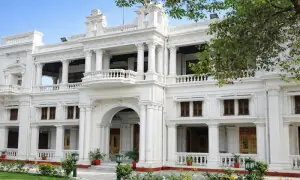
The car added to the splendour of majestic white-marbled Supreme Court building, becoming a centre of attention for the participants attending the National Judicial Conference in Islamabad.
Launched at the 1948 motor show as a variant of the Morris Oxford, with a four-cylinder 1,476 cc engine, the car was donated by Justice Jawwad S Khawaja of the Supreme Court, who was a partner in the law firm – Cornelius, Lane and Mufti – founded by late Justice Cornelius, a bright name in the country's judicial history.
He is remembered for his dissenting views in the 1955 Maulvi Tameezuddin Khan case when then Federal Court of Pakistan in a split decision had upheld Governor General Ghulam Mohammad's action of dissolving the first Constituent Assembly on October 24, 1954.
Justice Cornelius had differed with the view of the majority opinion and has been a celebrated judge ever since. Staying in a suite of the Flatties Hotel in Lahore, he led a bachelor's life and served as a Supreme Court judge for 17 years.
The museum also houses the car, personal belongings of former Chief Justice Yaqoob Ali, donated by his son Justice Yawar Ali of the Lahore High Court, and books on Christianity donated by Pakistan Bible Society Lahore.
The car and other artifacts were displayed inside the SC building in line with a decision to establish an archival museum to preserve and “project the judicial history and the evolution of the apex court”. The idea to set up the museum was floated by Justice Tassaduq Hussain, who along with Justice Nasir-ul-Mulk will be overseeing the project.
According to an official statement, the museum will “enhance greater public understanding and appreciation of the legal and judicial institution of the country. It will collect the rich history of Pakistan judiciary and law, share it with a diverse audience through a variety of programs, and preserve it for future generations.”The opening ceremony was attended by the judges of Supreme Court, chief justice of Federal Shariat Court, chief justices and judges of the high courts, senior, renowned lawyers and delegates from India.
The Supreme Court has requested the legal fraternity and larger public to extend their “full cooperation and whole hearted support” by providing any personal belongings for display. The donors will be given credit.