0
0

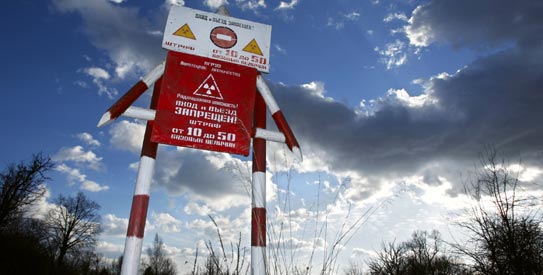
PARIS: Some 90 million people worldwide live within 30 kilometres (18.6 miles) of a nuclear reactor, equivalent to the exclusion zone around Japan's crippled Fukushima plant, a study released Friday shows.
The United States alone has nearly 16 million people within this range, followed by more than nine million each in China, Germany and Pakistan, and five to six million in India, Taiwan and France.
When the radius is expanded to 75 kilometres (46.6 miles), the number of people potentially at risk in case of a nuclear accident jumps to nearly half a billion, according to the analysis published by Nature.
More than 110 million are in the United States, with 73 million in China, 57 million in India, 39 and 33 million in Germany and Japan, respectively.
Looked at another way, more than a third of Americans live within 75 kilometres of a nuclear power plant, and nearly half of all Germans.
Population concentration near a reactor is not a measure of danger, which depends on numerous factors including earthquake risk, quality of maintenance, regulatory oversight and the amount of radioactive material on site.
But it does suggest how many people will be at risk if something does go terribly wrong, as happened in Fukushima, and in Chernobyl 25 years ago, Nature said.
Some 172,000 people lived in the 30-kilometre zone around the Japanese plant, which was hit by a 9.0-magnitude quake on March 11 and then, minutes later, a devastating tsunami.
Two-thirds of the world's 211 active nuclear power plants have populations within the same radius that exceed the number of residents forced to leave their homes in Japan, the analysis revealed.
There are 21 plants in the world with at least one million people within a radius of 30 kilometres, and for six of these plants the nearby population exceeds three million.
At the Kanupp facility in Pakistan, the figure rises to more than eight million people, though the reactor is rather small, with an output of only 125 megawatts.
By contrast, the Kuosheng and Chin Shan plants in Taiwan -- each with more than five million people within 30 kilometres -- generate 1,933 and 1,208 megawatts, respectively.
At the broader radius of 75 kilometres, China's Guangdong and Lingao plants top the list, casting a shadow over 28 million people each, including in Hong Kong.
The analysis, co-designed by Nature's Declan Butler, was carried out with NASA's Socioeconomic Data and Applications Center (SEDAC), based at Columbia University in New York. – AFP