0
0

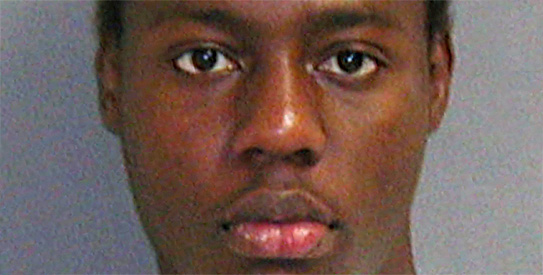
WASHINGTON: When an admitted Al Qaeda operative planned his itinerary for a Christmas 2009 airline bombing, he considered launching the strike in the skies above Houston,Texas, or Chicago, Illinois. Tickets were too expensive, however, so he re-focused the mission on a cheaper destination: Detroit, Michigan.
The decision is among new details emerging about one of the most sensational terror plots to unfold since President Barack Obama took office. It shows that Al Qaeda's Yemen branch does not share Osama bin Laden's desire to attack symbolic targets, preferring instead to strike at targets of opportunity. Like the plot that nearly blew up US-bound cargo planes last year, the cities themselves did not matter. It is a strategy that has helped the relatively new group quickly become the number one threat to the United States.
After the failed bombing and the arrest of suspected bomber Umar Farouk Abdul Mutallab, the question of why Detroit was targeted had gone unanswered. It was reported previously that he did not specifically choose Christmas December 25 for his mission.
Mutallab considered Houston, where he attended an Islamic conference in 2008, said current and former counter-terrorism officials. Another person with knowledge of the case said Mutallab also considered Chicago but was discouraged by the cost. All spoke on condition of anonymity because they were not authorized to discuss the case.
While the target and timing were unimportant, the mission itself was a highly organized plot that involved one of the FBI's most wanted terrorists and Al Qaeda go-to bomb maker, current and former officials said. Before Mutallab set off on his mission, he visited the home of Al Qaeda manager Fahd al-Quso to discuss the plot and the workings of the bomb.
Al-Quso, 36, is one of the most senior Al Qaeda leaders publicly linked to the Christmas plot. His association with Al Qaeda stretches back more than a decade to his days in Afghanistan when, prosecutors said, bin Laden implored him to ''eliminate the infidels from the Arabian Peninsula.''
From there he rose through the ranks. He was assigned the job in Aden to videotape the 1998 suicide bombing of the USS Cole, which killed 17 sailors and injured 39 others, but he fell asleep. Despite the lapse, he is now a midlevel manager in the organization. Al-Quso is from the same tribe as radical US-born cleric Anwar al-Awlaki, who had an operational role in the botched Christmas attack.
In December, al-Quso was designated a global terrorist by the State Department, a possible indication that his role in Al Qaeda's Yemen franchise has grown more dangerous.
Al-Quso was indicted on 50 terrorism counts in New York for his role in preparing for the Cole attack and served more than five years in prison in Yemen before he was released in 2007. On the FBI's list, al-Quso ranks behind only bin Laden and his deputy, Ayman al-Zawahiri, among the most sought-after Al Qaeda terrorists.
After meeting with al-Quso, Abdul Mutallab left Yemen in December 2009 and made his way to Ghana, where he paid $2,831 in cash for a round-trip ticket from Nigeria to Amsterdam to Detroit and back.
Abdul Mutallab, 24, is charged with attempting to use a weapon of mass destruction and conspiring with others to kill 281 passengers and 11 crew members aboard Northwest Airlines Flight 253. After his arrest, he admitted to the FBI that he intended to blow up the plane and later surfaced in an Al Qaeda propaganda video.
Mutallab initially cooperated with investigators, pulling back the curtain on some activities by Al Qaeda in the Arabian Peninsula, the Yemen-based offshoot that has quickly became Al Qaeda's most active franchise. Plea discussions fell apart, however, and he is scheduled to go to trial in October while acting as his own lawyer.
One of the challenges facing US intelligence officials is that much of the information they collect on terrorists comes from surveillance or informants, and the government is reluctant to reveal it. So if a terrorist is captured overseas, prosecuting him in the United States or persuading another country to hold him can be difficult.
A plea deal from Mutallab would have resolved that dilemma. His testimony could form the basis for indictments against al-Awlaki or perhaps bomb maker Ibrahim Hassan al-Asiri. And the United States would not have to disclose some of its most sensitive intelligence-gathering techniques. On Thursday, the State Department designated al-Asiri as a terrorist and banned Americans from doing business with him.