0
0

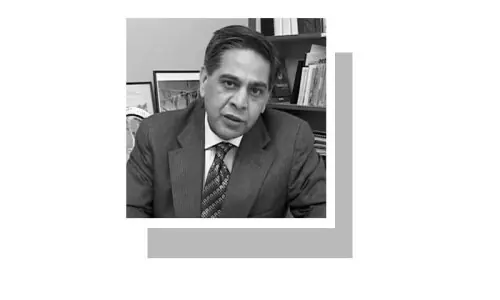
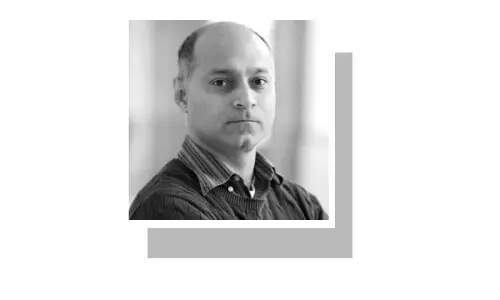
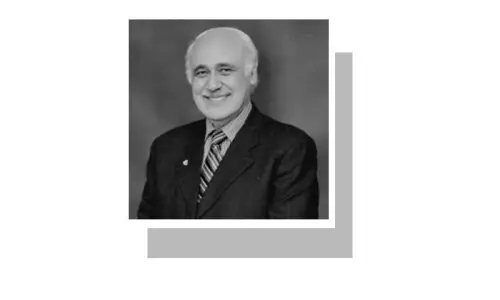
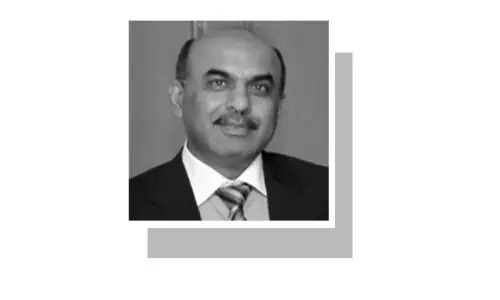
IT is generally believed that research scholars are a very serious lot and they hardly smile if ever. Perhaps the seriousness of their work dampens their sense of humour. But I know at least four scholars whose wittiness sets them apart.
One such researcher was Dr Waheed Qureshi. When I first met him some 20 years ago at his Lahore residence to seek some guidance, he enthralled me with his bubbling wit and I could hardly believe that I was talking to a scholar of Persian and classical Urdu literature whose name inspired awe in students like me.
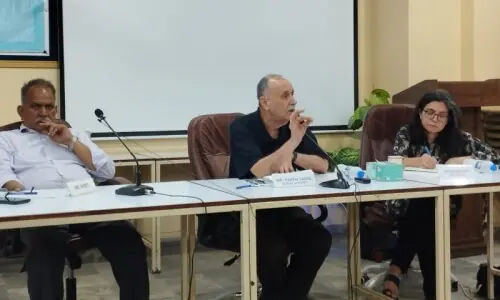
Another such scholar is Dr Farman Fatehpuri. A scholar of classical Urdu texts who is equally at home with lexicography, Farman Sahib is a sort of 'no-nonsense guy', as he is expected to be. But having enjoyed his scholarly company for several years, I can tell you that when he is in the company of his near and dear ones, Farman Sahib can surprise you with his gift of repartee and sharp wit.
Dr Tehseen Firaqi, a scholar in the true sense of the word, sometimes cracks a joke so seriously that the unsuspecting listener is astounded and it is only Firaqi's grin that gives him some clue.
Mushfiq Khwaja belonged to the same company. He was as great a scholar.
Farman Sahib and Firaqi Sahib have not written humour — at least not so far. Waheed Qureshi used to write a literary-cum-humour column in daily 'Jang', Lahore, (by the pen name of Mir Jumla Lahori), though it did not last very long. But Mushfiq Khwaja is known more for his humorous and satirical pieces, at least among the common readers, than for his research works. For several years, his column 'Sukhan dar sukhan' appeared in weekly 'Takbeer', Karachi. Every week, it would create some ripples that would not cease to hit the shores for long as these pieces were reproduced in many Indian Urdu journals. Some witty comments from recent columns were repeated in literary circles as 'quotable quotes' and kept on ringing. Most of the time, the butt of his satire were the writers and poets of Urdu, especially his contemporaries. Sometimes, Khwaja Sahib's comments would invoke some rejoinders and angry clarifications, too. But many of his 'targets' not only enjoyed his comments but some requested him to write yet another piece on their new book or personality as it guaranteed instantaneous recognition in literary circles of the Indo-Pak subcontinent.
On holidays, the writers and intellectuals gathered at Khwaja Sahib's Nazimabad residence which was frequented by writers from all over Pakistan and even abroad. It was a kind of informal weekly literary sitting but unlike the traditional or formal literary gatherings of today, it offered a lot to learn and Khwaja Sahib's witty remarks all along offered much to cherish. Some of his witticism has been reproduced by some of his visitors yet a great many sparkling witty remarks remain to be noted down. One of his famous one-liners was uttered when a writer lamented that hospitals charged exorbitant fees for delivery cases and in the past a midwife would come and after the baby was delivered she happily left with eight 'anaas' (a former coin worth half a rupee). Upon which Khwaja Sahib retorted: 'but for eight anaas you could only have babies as dumb as yourself'.
During these gatherings, Baba-i-Urdu Moulvi Abdul Haq's well-known servant, nicknamed Sufi Sahib, would bring us tea and remind us of the days when Baba-i-Urdu and Khwaja Sahib used to work together at Anjuman Taraqqi-i-Urdu. In those days, it was perhaps the only literary gathering of its kind and I have seen many of Urdu stalwarts there. It was a kind of tribute they paid to Khwaja Sahib by visiting him.
Born Khwaja Abdul Hai on December 19, 1939 in Lahore, Mushfiq Khwaja was a scholar, editor, columnist, poet, humourist, literary journalist and a wit. He was a bibliophile, too. His house literally brimmed over with books and sometimes visitors had to tread carefully because as a result of overflowing bookshelves the walkway to his drawing room had stacks of books carefully arranged by the walls. Drawing room itself had bookshelves and piles of newly-arrived books that Khwaja Sahib allowed visitors to browse. Hardly any worthwhile new publication on Urdu literature skipped Khwaja Sahib as authors would gladly send him signed complimentary copies and the remaining he would buy. When new books from India arrived, he overjoyed and shared them with his friends and visitors. Khwaja Sahib's another hobby was photography and he had convinced hundreds of writers to have their photographs taken. Not only that, many of them acceded to his request to jot down their life sketches and hand it over to him. I had seen many such authentic accounts preserved in a notebook, duly signed by the authors. Another of his specialty was rare manuscripts. Dr Muhammad Sadiq, an authority on Muhammad Hussain Azad, handed over to Mushfiq Khwaja rare handwritten scripts of Azad. He honoured me by letting me have a peep at them along with other rare preserved documents. It is a matter of great satisfaction that now his library has been arranged and is being digitalised.
His father, Khwaja Abdul Waheed, was a scholar and a friend of Allama Iqbal. The family settled in Karachi after the creation of Pakistan. Mushfiq Khwaja got a master's degree in Urdu from University of Karachi in 1958. He used to visit Anjuman Taraqqi-i-Urdu and spend time reading and researching there. His brilliance and hard work attracted Baba-i-Urdu's attention and soon Mushfiq Khwaja started assisting him. Before his death in 1961, Baba-i-Urdu appointed him editor of 'Urdu' and 'Qaumi Zaban', the two coveted journals the Anjuman still publishes. 'Takhleeqi Adab' was a literary magazine that he launched and made it a standard to conform with. In addition to the Anjuman, Khwaja Sahib served many literary and research institutes on honorary basis and notable among them is Idara Yadgar-i-Ghalib, Karachi. Among his research works, 'Khush marka-i-zeba', a tazkira in two volumes, is considered an example for researchers to emulate. 'Jaeza-i-makhtootat-i-Urdu' is yet another work that earned him respect and fame. His other research works include 'Purane shaer naya kalam', 'Iqbal az Ahmed Deen', 'Ghalib aur Safeer Bilgirami', 'Tehqeeq Nama', 'Kulliyat-i-Yagana' and 'Yaad-i-ayyaam'. His satirical columns were edited by Muazaffar Ali Syed and published in his lifetime in three volumes. Another such collection, edited by Anwer Sadeed, was posthumously published.
At least three collections of his letters have so far been published and more are on the way as Khwaja Sahib was a prolific letter writer and loved to write letters to his friends and fans. A collection of his poetry 'Abyaat' had appeared in 1978 but in the later part of his life he used to shun it.
Mushfiq Khwaja died in Karachi on February 21, 2005 and was buried in Karachi's PECHS Society graveyard — and with him were buried the days and an atmosphere that will never return.