0
0

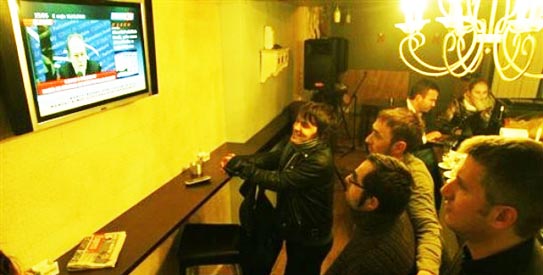
PRISTINA: As it marks three years since declaring independence on Thursday, Kosovo continues to face enormous political and economic hurdles worsened by its recently damaged image, analysts said.
“In the eyes of the western world, which allowed Kosovo to become a state, Pristina’s position is now worse than three years ago when it declared independence,” head of a renowned local think-tank, Ylli Hoxha, told AFP.
Three years on from its declaration of independence, it was struggling to persuade more countries to recognise its status, explained Hoxha, executive director of the Pristina-based Foreign Policy Club.
For this reason alone, he added, “Kosovo could really not afford such a bad write up as it got in the Dick Marty report.”
Hoxha was referring to a damning report submitted by the Council of Europe rapporteur Dick Marty implicating some of the country's leading politicians in serious crimes.
Marty alleged that Kosovo Albanian guerrillas had been involved in organ trafficking and other serious crimes during and in the aftermath of the 1998-99 war.
These atrocities, he alleged, were overseen by Prime Minister Hashim Thaci and other former leaders of the Kosovo Liberation Army (KLA) who went on to high political office. Thaci denies the allegations.
The Council of Europe’s parliamentary assembly endorsed his report last month. The allegations had further damaged Kosovo’s already poor image, said Enver Robelli, a journalist and Balkan specialist.
And on top of that, Kosovo is struggling with a weak economy.
According to official data Kosovo is among the poorest countries in Europe: its jobless rate is 40 percent and 45 percent of its two million-strong population lives below the poverty line.
While many people, such as 27-year-old economist Korab Ajeti, still consider Independence Day “sacred”, they are not happy with the current state of affairs.
“I see little progress and many, many failures,” he said, pointing to economy and education as the biggest problems.
As Kosovo struggles to transform itself from a war-ravaged region into a European nation many local observers blame the political elite for its failure to improve living standards. “It was not realistic to expect economic miracles and paradise in three years, said Safet Gerxhaliu, head of the Chamber of Commerce.
“But the country has not done for its citizens what it could have even with limited sources,” he added.
“What we have had so far is that... the political elite is getting richer while many other social layers are getting ever poorer.”
In recent months the Kosovo government has been shaken by repeated allegations of the misuse of public funds by senior officials.
EULEX, the European Union Rule of Law Mission in Kosovo, is investigating several such allegations.
“There is an image now that Kosovo is a country where decision making and corruption go hand in hand,” Hoxha said.
International and domestic pressure is mounting on Thaci, who won December’s early elections, to form a new government excluding politicians tainted by allegations of corruption.
That would rule out several senior members of his own PDK party.
Kosovo, which unilaterally declared independence from Serbia on February 17, 2008, has so far been recognised by 75 states, including the United States and a majority of European Union members.
But further recognition for Pristina has proved hard to come by as Belgrade continues to campaign vigorously against it.
Belgrade and Pristina have agreed to EU-brokered talks in order to ease strained relations: Brussels is pressing them to tackle basic issues, such as communications, transport and energy.
A date for the talks has yet to be set, however.
“Kosovo is not ready yet and has not prepared a strategy for facing Serbia in the talks,” Robelli said.
As the anniversary of its independence approaches, the mood in Pristina is gloomy: no major celebration events have been planned.
The Daily Koha Ditore reported on Monday that the event would only be market with celebrations organised by local councils.