0
0

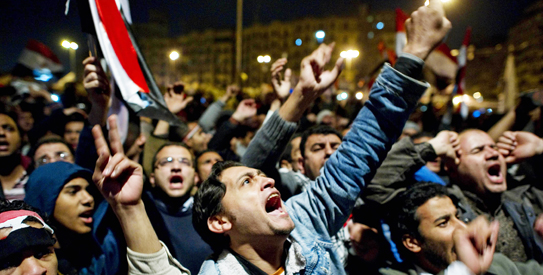
CAIRO: The mood in Tahrir Square was exultant. Finally, the protesters thought, their moment in history had come: President Hosni Mubarak was about to quit. Then euphoria turned to fury.
As Mubarak began speaking on television Thursday night, his voice reverberating over audio speakers and mobile telephone radios, the words the huge crowd expected did not come.
Unease turned to head-shaking disbelief and murmurs of disgust. Then anger surged, and tears of frustration fell.
Mubarak was not stepping down.
Even before he finished speaking, people were booing and chanting “Get out!” and “We’re not happy!” while waving their shoes in the air, the soles facing toward a large open-air screen that showed the president speaking from notes behind a podium.
Gesturing with shoes is a grave insult in the Arab world. But it was the crowd that felt insulted, cheated, their expectations shattered after a day of conflicting reports about what would come next in the Egyptian crisis.
One of the rumors, fed partly by a military statement that protesters’ demands would be met, was that Mubarak would resign. Instead, he handed his powers to his vice president and promised reforms, including repeal of the hated emergency laws.
He said he was “adamant to continue to shoulder my responsibility to protect the constitution and safeguard the interests of the people” and vowed that he would remain in the country.
The many Egyptians who oppose him, however, believe no genuine reform is possible as long as Mubarak stays in office. They said they would stage bigger protests, and some even called for the military to oust him.
“The speech is provocative,” said Muhammed Abdul Rahman, a lawyer. “This is going to bring people together more, and people will come out in greater numbers.”
Hazim Khalifa, a chemist, said: “He’s tried to divide people before. Now the people understand him and they’ve learned his ways.”
Hisham Bastawisi, a reformist judge, said Mubarak “lives in a coma” and that “the armed forces must interfere and oust him before it is too late.”
Tears welled up in the eyes of people who just half an hour earlier had been waving flags in elation and chanting “We’re almost there!” as hundreds of thousands crammed into the square to await Mubarak’s speech.
In addition to the long sit-in at Cairo’s central square, new demonstrations and strikes have erupted across the country as more and more Egyptians call for change.
In the weeks of protest, the square has evolved into a multifaceted tent city complete with makeshift clinics, food stalls and numerous displays and dioramas celebrating the achievements of activists and the perfidy of the government.
Almost immediately after the president’s speech, many in the crowd began slowly filing out in sullen anger, while others marched to the offices of the state television station, which has broadcast pro-government messages.
A massive demonstration had been planned for Friday, but earlier protesters had assumed it would be a victory celebration after the expected resignation of the president.
Khaled Abdel Hamid, a protest organizer, said protesters planned to escalate their actions and march on the nearby Ministry of Information and state television headquarters Friday.
“This is a poor speech from a poor leader,” he said. “If he is stubborn, we are stubborn. We are ready to die here.”