3
3

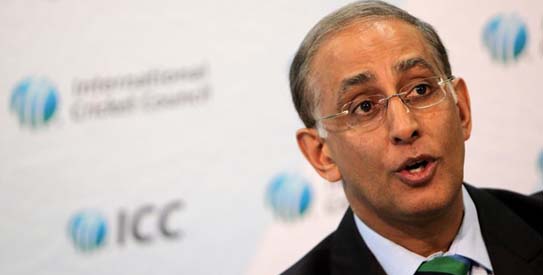
DOHA: The International Cricket Council's chief executive Haroon Lorgat on Sunday said three Pakistan players -- Salman Butt, Mohammad Asif and Mohammad Amir -- were banned on solid proof of corruption.
“We are satisfied at the tribunal's decision, which was taken on solid evidence and we hope with this decision the image of the game will improve,” Lorgat told a press conference in Doha.
Lorgat, who was accompanied by the head of the ICC's Anti-Corruption and Security Unit, Ronnie Flanagan, was speaking a day after Butt, Amir and Asif were handed lengthy bans for spot-fixing.
Butt was banned for 10 years, with five years suspended, while Asif and Amir were handed bans of seven years with two suspended and five years respectively.
The charges relate to alleged incidents during the Test against England at Lord's last year, when Britain's News of the World newspaper claimed the players were willing to deliberately bowl no-balls.
The newspaper alleged the three had colluded in a spot-fixing betting scam organised by British-based agent Mazhar Majeed.
In a separate development on Friday, British prosecutors charged the three players as well as Majeed with corruption offences and summoned them to appear in a London court on March 17.
The trio have repeatedly denied wrongdoing.
Lorgat rejected the suggestion that the punishments were lenient.
“I don't believe the sentences are lenient by any stretch of the imagination,” said Lorgat.
“I think they are balanced with an expert and experienced jury dealing with the case.”
The three-man tribunal was headed by Michael Beloff QC and also contained Albie Sachs of South Africa and Sharad Rao of Kenya.
“In legal terms you have to be proportionate when you are giving punishment and we must distinguish between match-fixing and spot-fixing, and the jury was independent and they decided on proportionate punishments,” said Lorgat.
Butt and Amir have expressed disappointment at the bans, with Butt hoping to get the ban reduced once the ICC code of conduct -- which carries a mimimum five-year punishment -- is amended.