0
0

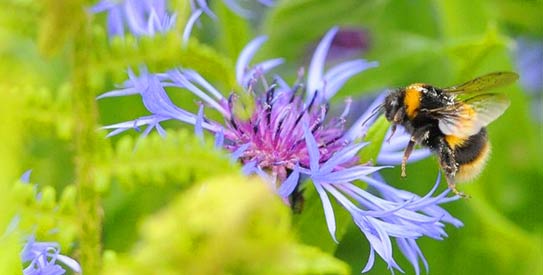
WASHINGTON: Four previously abundant species of bumblebee are close to disappearing in the United States, researchers reported on Monday in a study confirming that the agriculturally important bees are being affected worldwide.
They documented a 96 percent decline in the numbers of the four species, and said their range had shrunk by as much as 87 per cent. As with honeybees, a pathogen is partly involved, but the researchers also found evidence of inbreeding caused by habitat loss.
“We provide incontrovertible evidence that multiple Bombus species have experienced sharp population declines at the national level,” the researchers reported in the Proceedings of the National Academy of Sciences, calling the findings “alarming.”
“These are one of the most important pollinators of native plants,” Sydney Cameron of the University of Illinois, Urbana, who led the study, said in a telephone interview.
In recent years, experts have documented a disappearance of bees in what is widely called colony collapse disorder, blamed on many factors including parasites, fungi, stress, pesticides and viruses. But most studies have focused on honeybees.
Bumblebees are also important pollinators, Cameron said, but are far less studied. Bumblebees pollinate tomatoes, blueberries and cranberries, she noted.
“The 50 species (of bumblebees) in the United States are traditionally associated with prairies and with high alpine vegetations,” she added.
“Just as important -- they land on a flower and they have this behavior called buzz pollination that enables them to cause pollen to fly off the flower.”
This is the way to pollinate tomatoes, Cameron said -- although smaller bees can accomplish the same effect if enough cluster on a single flower.
Several reports have documented the disappearance of bumblebees in Europe and Asia, but no one had done a large national study in the Americas.
Cameron's team did a three-year study of 382 sites in 40 states and also looked at more than 73,000 museum records.
“We show that the relative abundance of four species have declined by up to 96 per cent and that their surveyed geographic ranges have contracted by 23 per cent to 87 per cent,” they wrote.
While no crops are in immediate danger, the results show that experts need to pay attention, Cameron said. Pollinators such as bees and bats often have specific tongue lengths and pollination behaviors that have evolved along with the species of plants they pollinate.
Bumblebees can fly in colder weather than other species, and are key to pollinating native species in the tundra and at high elevations, Cameron said.
Genetic tests show that the four affected bumblebee species are inbred and other tests implicate a parasite called Nosema bombi, Cameron said.
“This is a wake-up call that bumblebee species are declining not only in Europe, not only in Asia, but also in North America,” she said.