0
0

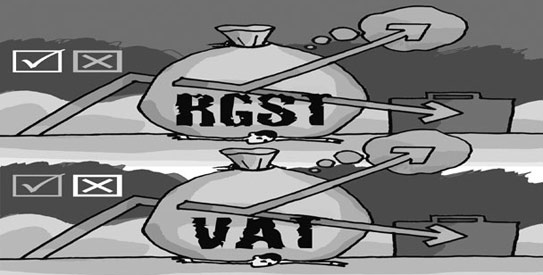
- The crucial differences between the centre and provincial governments over taxation on inter-provincial services and their sharing mechanism are yet to be resolved. — File Photo
The RGST, which is supposed to replace the current general sales tax, was originally scheduled for implementation in July but has been delayed several times since then. Even its latest implementation date, Jan. 1, seems unlikely now.
The delays will squeeze revenue while Pakistan's spending is surging to deal with the aftermath of floods that caused almost $10 billion worth in damage.
The revenue shortfall could push the budget deficit above 7 per cent of gross domestic product (GDP), analysts estimate, compared with the 4.7 per cent target agreed with the International Monetary Fund for fiscal year 2010/11.
“The rising fiscal deficit is squarely against one of the main covenants of the agreement with the IMF, which is likely to delay future tranches,” said Asad Iqbal, chief investment officer at Faysal Asset Management Ltd.
“If the IMF loses confidence in the government's ability to manage this deficit, funding from other foreign institutions is also likely to dry up, resulting in severe consequences for the country.”
In November 2008, Pakistan agreed to an $11 billion bailout programme with the IMF to avert a balance of payments crisis. It received the fifth tranche of the loan - $1.13 billion - in May 2010.
The United States regards Pakistan as an important ally in its war on militancy in the region and the State Bank of Pakistan reported on Monday it had received $633 million in Coalition Support Funds from the United States.
But the delay in the sixth IMF tranche, a lack of foreign aid and the cost of rebuilding after August's floods has more than trebled government borrowing from the central bank, to a provisional 324.64 billion rupees ($3.785 billion) from Jul. 1 to Dec. 11, compared with 106 billion rupees in the same period last year.
To try and make up the shortfall, the government is considering a “Plan B”, according to media reports.
This would end the current general sales tax exemptions that have been given to sectors such as textile and fertiliser production.
And while the government has not said there are alternatives being worked out - “There is no Plan B as far as I know,” said a senior government official, who requested anonymity because of the sensitivity of discussing tax reforms - analysts said the exemptions may be quietly removed to avoid the kind of opposition that has greeted the RGST.
Imposing new taxes at the behest of the IMF, which is hugely unpopular in Pakistan, is a tough sell.
Reform would help curb Pakistan's endemic tax evasion - its tax-to-GDP ratio is around 10 per cent, one of the lowest in the world. But the RGST bill, introduced in November after months of delay, is vigorously opposed by almost every political party.
And while it will probably eventually pass, no one can say when or in what form.
Thus, Plan B. The Federal Board of Revenue has the authority to remove exemptions without the approval of coalition partners to the government.
Analysts said there may not be enough political will to implement even that change.
“The government does not realise the gravity of the situation and the sense of compliance is not there as they are not in pressing need to get a tranche released from the IMF because of the improving current account balance,” said Asif Qureshi, a director at Invisor Securities Ltd. He said that balance could easily deteriorate with the rise in international oil prices.
Pakistan's current account has shown a surplus for the last three months. The IMF bailout was designed to shore up reserves and avert a balance of payments crisis.