



 0
0

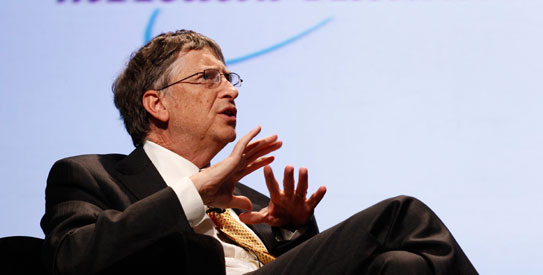
WASHINGTON: Mobile technology can help improve global health with cheap diagnostic tools, patient reminders and making immunization programs more efficient, Microsoft founder Bill Gates said Tuesday.
“The mobile phone is pretty interesting for lots of things,” Gates said in a keynote address at the mHealth Summit here, a gathering of public and private sector groups and companies involved in mobile technology and health.
“There are a whole lot of opportunities,” said Gates, who stepped down from day-to-day duties at Microsoft two years ago to concentrate on global health care through the Bill and Melinda Gates Foundation.
“I think we have to approach these things with some humility though,” Gates cautioned, pointing out that “there’s no Internet and data connections” in much of the world.
“I do think there’s absolutely a role (for mobile technology to impact global health) but I think we have to hold ourselves to some pretty tough metrics to see if it’s really making a difference or not.” Gates said the cellphone can allow health care professionals to “actually be there with a patient, to be there in a clinic which might not be staffed with wholly trained doctors.” TB diagnosis. That would be a huge thing,” Gates said.
“When I think about the biggest impacts I think of patient reminders,” he added. “You could get people to take medicines regularly, that’s a huge one.”Gates said mobile technology could also help improve immunization programs.
“If you could register every birth on a cellphone, get fingerprints, get a location, then you could take these systems where you go around and make sure the immunization happens, you could run that in a more effective way,” he said.
“You could get a huge improvement if you just take the vaccines we have today and get those delivered.” Gates was also asked what he sees next on the technology and health front.
“If you just want to pick one thing it’s got to be robots,” he said.
“When we look at something like maternal mortality there’s a certain level you can’t go below if you can’t do C-section,” he said.
“Doing a C-section requires a sterile environment, a certain expertise and yet in some ways it’s very routine. If you can have a robot that can do that, that’s fairly inexpensive, that’s a great thing.” Computers have gone from just sitting there,” he added. “The computer, it’s learning to see, it’s learning to talk, and it’s learning to listen.
“And it’s also learning to move around,” Gates said.
He said a robot, for example, could eventually be developed that could lift and carry a patient.
“Humans are surprisingly good at this,” he said. “That’s a hard thing for a robot. But once a robot can do it, it doesn’t forget how to do it and it can do it 24 hours a day.” – AFP


























