0
0

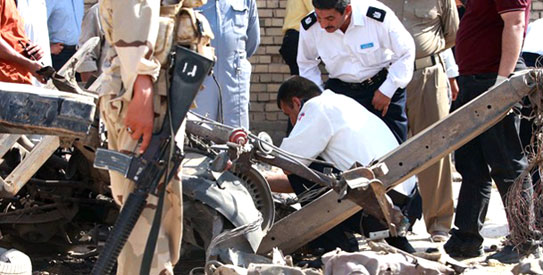
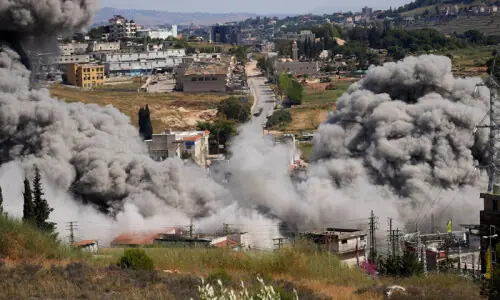
KARBALA: Three car bombings in mainly Shia southern Iraq, two of which targeted Iranian pilgrims visiting holy cities, killed at least 28 people on Monday, police and military sources said.
The attacks came as Shia, Sunni and Kurdish political rivals bickering over an elusive power-sharing deal that has left Iraq without a new government for eight months held a first day of all-party talks without a breakthrough.
Twin bombings in the Shia holy cities of Najaf and Karbala targeting Iranians killed at least 18 people, 10 of them pilgrims from Iran. Police and local officials said the attacks also wounded 58 people, mostly Iranians.
In Karbala, a suicide bomber pulled up his booby-trapped vehicle alongside a bus carrying pilgrims from neighbouring Iran then detonated his payload, police officials said.
The explosion killed 10 people, four of them Iranians, and wounded another 42, hospital officials said.
The bomber struck in the northern part of Karbala through which traffic headed to the city's tightly-guarded shrines passes on the way down south from Baghdad.
Another car bombing targeted three buses in Najaf carrying Iranian pilgrims, police said. A bomb blast killed eight people, six of them Iranians, and wounded 16 others, said Khaled Jashani, a member of Najaf's provincial council.
About 1,500 non-Arab pilgrims a day from predominantly Shia Iran visit the faith's holiest shrines in Karbala and Najaf as well as in the capital of Iraq, a country with a Shia majority.
In the southern port city of Basra, a car bomb in a crowded market killed at least 10 people and wounded 30, a military officer said. The attack targeted a popular shopping district full of stores and cafes.
The attacks came as Iraqi Shia, Sunni and Kurdish political rivals met in the Kurdish city of Arbil, northern Iraq.
Foreign Minister Hoshyar Zebari said last week that the surge of violence, including a hostage-taking by Al-Qaeda gunmen at a Baghdad church which left 46 worshippers dead on October 31, was due to the failure to form a government.
“The attacks and explosions ... are due to the constitutional and political vacuum and the delay in the formation of the government, which gave the terrorists the opportunity to attack civilians,” he said.
Sectarian bloodletting between Iraq's Shiites and the Sunni Arab elite ousted following the 2003 US-led invasion has plunged dramatically since its peak in 2006 and 2007, despite Monday's bomb attacks.
In two attacks in northern Iraq on Monday, gunmen killed two policemen at a checkpoint near Mosul and an improvised bomb exploded outside a grocery store in Khalis, Diyala province, killing one person and wounding three. -AFP