0
0


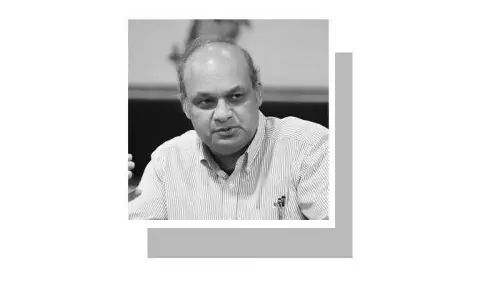
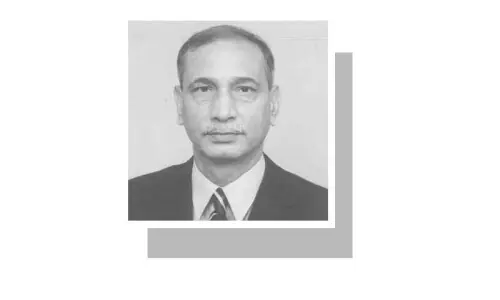
It was way back in 2003 that I interviewed him, and I still remember the way he began the conversation with these remarks 'I was born into a scholarly family and grew up among writers and poets which instilled in me a strong desire to accumulate more and more knowledge.
'My father, Akhunzada Qamar Ali, was a known playwright and journalist of high repute and recipient of an award from the viceroy of India in recognition of his meritorious services to literature.'
Nayyar's ancestors, members of the Akhun Khel tribe, were disciples of Diwana Baba in Buner. They migrated to Peshawar in 1814. He was born on August 16, 1935 in Kohati Gate, Peshawar and received his early education at Edwards High School. He joined the teaching profession in 1962 and attained superannuation in 1986.
Author of more than 20 books on topics such as history, lexicography, evolution and Hindko and Urdu literature, Nayyar was a poet, prose writer, columnist, linguist, researcher, historian and lexicographer. As a result, many critics say he was well-deserving of the title of Baba-i-Hindko because of his immense contribution to the language.
He created his own school of thought without receiving rebuttal from any literary quarters as his attitude was quite unbiased. His television programmes in Hindko, including Dekhda Janda Ra'y and Main Boloon Kay Nah Boloon, were reflective of his sharp critical gaze that impacted not only the Hindko-speaking community but also general viewers. In the mid-1980s he scripted Hindko folk stories which won much appreciation from critics and readers.
The literary journal Hindko Zuban was launched in 1973 under his editorship. It continued to be published until 1977 and was later relaunched in 1989. Nayyar was conferred the Tamgha-i-Imtiaz in 1992 for his remarkable contribution in the field of literature.
His maiden book titled Hindko Qawaid was released in 1968. In it he discussed the structure and grammar of Hindko language. He was the first among the literati who carried out extensive research, on scientific lines, on Hindko language and literature. He wrote manuscripts spreading over thousands of pages on classical poets, folklore, Hindko script, etymology and the history of Hindko prose.
Some of his books published during his life time are Tarikh-i-Hindko (1970), Hindko Matalaan (1977), Tarikh-i-Zuban Aur Adab Hindko (1980), Hindko Lok Khanian (1989) and Azeem Gandhara Aur Hindko Zuban (1998).
He once said that, 'Hindko enjoys a rich legacy; its fascinating harfi and charbita inspire me very much. Peshawar is witness to many historical and cultural events. Linguistically speaking, this region is the most ancient and so its dwellers should be proud of their heritage.'
Nayyar passed away on June 12, 2009 due to cardiac arrest at the age of 74.
I clearly remember when, clad in a traditional Peshawari waistcoat with a pen tucked in its chest pocket and a hopeful smile on his face, he remarked with a tinge of satire 'A son of the Peshawari soil will soon come and publish all the stuff lying before you. This is all that I have done in my lifetime.'
I hope that his cherished dream will come true and his literary treasures are soon published.