0
0

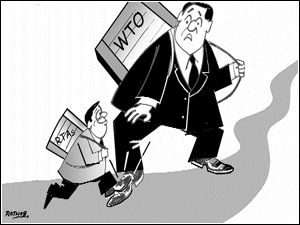 Long before the World Trade Organization (WTO) took shape, a large number of regional groups were already in existence. In the period 1948-94, the GATT received 124 notification of the Regional Trade Agreements (RTAs) relating to trade in goods and since 1995, over 100 applications covering trade in goods or services have been notified to the WTO.
After addition of the new RTAs and discontinuation or redesignation of agreements, there are over 150 RTAs in force as notified to the GATT/WTO.
These include regional groups like the North American Free Trade Agreement (NAFTA), European Union and the European Free Trade Agreement (EFTA), the South Asian Association for Regional Cooperation (ASEAN), also South Asian Free Trade Agreement, Common Market of the South (Mercosur) which consists of Latin American states with some seeking merger with the NAFTA.
The question frequently arises, whether these regional groups help or adversely hinder the multilateral trading system of the WTO.
The WTO and its predecessor the GATT, have allowed member countries to conclude customs unions and free-trade areas, as an exception to the fundamental principles of non-discrimination set in the most favoured national clause of Article 1. The RTAs have been directed to regional groups to facilitate trade between the regional member states not to raise barriers to the trade of other WTO members, not party to the RTA.
For all practical purposes, non-RTA members cannot escape the impact of the specific rules which are designed for the members of their group. More than 85 per cent of the world trade, after full implementation of regional trade agreements which will also bring the Organization of Pacific Economic Cooperation (OPEC) in its fold, will be handled through RTAs. Will rest of developing countries of five continents, not part of any regional agreements, will have a fair share in the multilateral global trade systems or they will depend on the left-over “crumbs” saved for poor and less technological advanced states?
There is no doubt that the WTO has been fully aware of the implications of so-called parallel trading system and since 1995, it is seized with this problem. A committee has been formed and it is examining all regional trade agreements to ensure that none of the provision of the RTA clash with the WTO’s.
I had attended the WTO public symposium in Geneva on “Doha Development and beyond” towards the end of April this year and got an opportunity to pass on my article “Globalism vis-a-vis Regionalism” to Mr Mike Moore, Director General of the WTO. He has responded as follows:
“ The ‘regionalism versus globalism or multilateralism ‘ debate has been with the GATT/WTO system for several decades. It entails an array of inter-linked questions, of a (geo) political, economic and legal nature. As you know, opinions differ widely. Some view regionalism as a complement to multilateralism, arguing that regional liberalization strengthens the hand of pro-trade forces and acts as a catalyst for global liberalization. Others point to its potentially negative effects, in terms of trade and investment diversion.”
“ Nonetheless, regionalism is not only a fact in international life but a growing phenomenon. During the last decade there has been a surge in both the number and scope of regional trade initiatives, and this trend is likely to intensify further in the near future. Such a proliferation of regional trade agreements might lead to a situation in which MFN treatment becomes “least” rather than” most favoured”. It remains true, however, that while almost all the WTO members are party to one or more RTAs, all are by definition a third party to a growing number of RTAs. Thus, the common interest lies in promoting regional initiative that bolster multilateral trade liberalization efforts.”
“ The RTAs constitute a major exception to the non-discrimination principle embodied in the MFN clause. But the WTO members are allowed by the existing rules to further the market access they have bound in the WTO by concluding RTAs, albeit subject to a certain number of Riteria (e.g., transparency, deep internal trade liberalization and neutrality vis-a-vis non-patty members’ trade).
Diverging interpretations of the existing rules on the RTAs have, however, opened the door to a situation of ambiguity with respect to the RTA-WTO relationship.”
“ I personally consider it an auspicious development that, in recognition of that situation, at the fourth ministerial conference in Doha, the WTO members agreed to launch negotiations aimed at clarifying and improving the disciplines and procedures under the existing WTO provisions applying to the RTAs.”