0
0

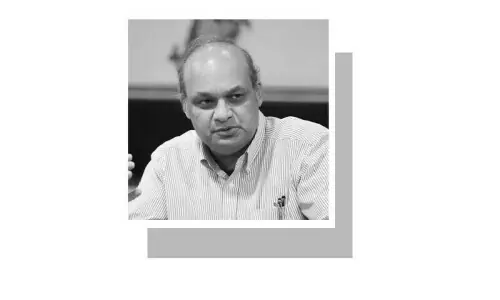
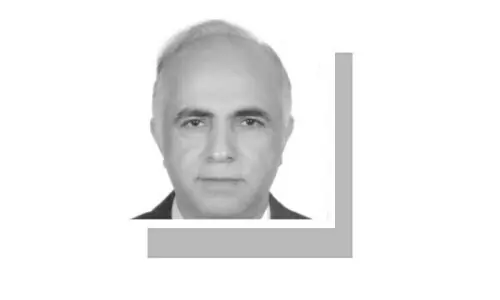
Azhar Abidi lives in Australia and his first novel Passarola Rising was short-listed for the 2006 Melbourne Literary Prize, translated into Portuguese, Spanish and Romanian and is the first full length work of science fiction in Pakistani English literature.
Set in 18th-century Europe, it draws on historical events and creates wondrous fantasies around a real-life flying ship. Abidi`s new novel Twilight — the US edition is titled The House of Bilquis — tells of a Karachi matriarch Bilquis Begum who is trying to cope with changing times and her son`s marriage to an Australian, while her Pathan maidservant falls in love with a Kashmiri chowkidar/mujahid.
The novel highlights the vastly different worlds the characters inhabit and comments on choices, commitment and inter-connectedness. Abidi belongs to a literary family which includes Syed Abid Ali of the BBC, the Urdu short story writer Naiyer Masud and columnist Sarwar Ali Abidi. Born and brought up in Wah Cantt, Abidi followed his father into electrical engineering, at first.
He graduated from the Imperial College of Science and Technology London and worked with Siemens in Germany and Karachi. He then changed careers and did an MBA at the University of Melbourne. In an e-mail interview he talks about his gestation as a writer.
In Melbourne, how do you manage a dual career in finance and literature?
I work as an investment director four days a week for an investment firm in Melbourne. I write on my day off and at night and on the weekend. It is a slow process, but I am not at the stage in my writing career where I can afford to give up my day job. As for the work, I would rather do something as far away from writing as possible. It allows me to come back to my writing with a clear mind.
What are your most vivid memories of Wah?
Wah was a wonderful cantonment town, with clean, well-lit roads and brick houses with box hedges and perfectly mowed lawns. For some reason, my most vivid memories of those years are the family trips to Murree, where the extended family used to get together.
I always felt a little awed when my family went to visit relatives in Karachi, especially in Clifton, where people spoke English to each other. I couldn`t understand as a child why Pakistanis would speak English to each other when they could so easily speak Urdu — the irony that I write in English is not lost on me.
If Urdu was your first language, what determined your choice of English as a creative language?
There was no conscious decision or deliberation on my part. I just fell into it. I felt that I was able to express myself more easily in English. There was a wide variety of literature available in the English language rather than Urdu and, I suppose, my writing was influenced by my reading.
Which books influenced you?
I started reading children`s stories in Urdu long before I was able to read English. In the early 1970s, there was a good selection of children`s literature available in Urdu, published by Ferozsons who had admirably commissioned translations of H. G. Wells, Stevenson and Melville. I read books like 20,000 Leagues under the Sea and Moby Dick in Urdu long before I read them in English.
Apart from the dastans, these 19th-century adventure novels were probably the first major influence on me as a writer.
In my 20s, I started reading authors like Camus, Saint Exupery and early Tolstoy. I was also influenced by travel writers like Robert Byron, Chatwin, Thesiger and Peter Fleming. In my late 20s and early 30s, I admired Tanizaki, Thomas Mann, Lampedusa and Grossman. Now that I am in my 40s, I plan to read Proust.
When did you begin your career as a writer?
I started writing for the college magazine at Imperial College in London. I wrote my first novella whilst there, a highly derivative work inspired by Camus, which I sent to a number of publishers under a false name. I had grand hopes for it and was so occupied with finishing the manuscript that I nearly failed my exams. The manuscript was rejected but I began considering myself a writer.
Musharraf Farooqi`s English translation of Amir Hamza is dedicated to you. Are you old friends?
I met Musharraf in 1992 at The News office in Karachi. I wanted to write book reviews and he used to edit the Bookworld page in those days. He obliged me and we became friends. We are both devotees of Amir Hamza and Tilism Hosh Ruba, which we read as children in the abridged version published by Ferozsons.
We used to talk about translating these dastans into English. It made perfect sense to us. If The Arabian Nights could be translated then why not these dastans? The result of all this was that some years later, after I had migrated to Australia, I wrote a novella called Majoka, which was in the style of a qissa, and Musharraf translated Amir Hamza.
Was it difficult to find a publisher at first?
I wrote Majoka and Passarola Rising but had no luck in finding an agent or a publisher. In 2002 I sent a short story, `The Secret History of the Flying Carpet` to an Australian literary magazine. The editor accepted it for publication and liked it so much that he showed it to a New York literary agent, Tom Colchie. When Tom signed me up I was over the moon. Passarola Rising was accepted for publication in the US, Canada, India and Australia.
Passarola Rising revolves around a true event in aviation history — the invention of a flying ship, The Passarola (Great Bird) by the Fr Bartolemeu. Was `The Flying Carpet` a prelude?
Yes, it was a prelude to Passarola Rising which started its life as a short story I have always had a fascination with flying machines. I used to linger as a child over the illustrations of medieval contraptions with wings and sails that could soar over the earth.
Writing this book fulfilled that desire of flight. There was a great deal of research involved to understand that period and in order to re-create the flying ship I studied the scientific theories popular at the time.
Twilight is very different and is set largely in modern Karachi. Is this a kind of home-coming?
Many years ago, Musharraf and I talked about writing a story about mothers who see their children grow up and leave home. I have seen many of my friends and cousins from Pakistan leave home and go overseas, so there was no shortage of real life counterparts of my fictional characters.
This phenomenon — of young people leaving home and the old parents staying behind with the servants — was my inspiration to write Twilight.
I drew extensively on my own experiences. My parents had hoped that I would marry a Pakistani but I fell in love with an Australian girl and married her instead. My wife didn`t want to live in Pakistan because of her ties to Australia. I felt a sense of duty to my parents who stayed behind in Pakistan.
Every time I went back after an absence of a few years I would notice them growing a little older and frailer. I was haunted by the thought that one day I would get a pho ne call to inform me that one of my parents had died. I wondered if I had done the right thing by leaving home and by marrying a foreigner.
These were the sort of things that gave me the context for Twilight, but it`s not an autobiographical novel. Kate is not my wife and Bilquis is not my mother, but if you want to know my favourite Pakistani dishes, they are all listed in the novel.
What next?
My next novel is set in Iran, during and after the 1979 revolution. It is the story of three young people and how their lives change in the aftermath of the revolution. It is an ambitious project and, because I am a slow writer, it will take me years to write it.