0
0

KARACHI, Oct 31: The Abdullah Village - a place of traditional fishermen and livestock holders in Keamari Town - has been left neglected by the administration of concerned local bodies institutions.
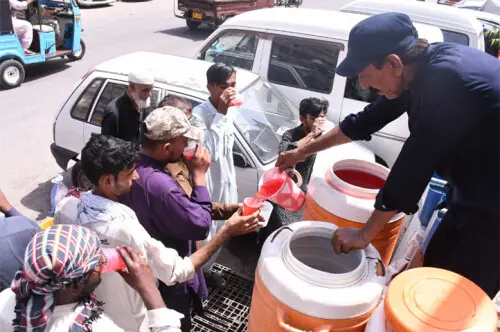
Located at distance of 5-km from an attractive picnic point, Hawkesbay, the village people lack access to drinking water, and are compelled to buy it through water tankers for Rs500 a tanker.
The yet-to-come-true dream of a basic health centre in the village is also an example of the apathy of concerned authorities.
"We have seen the deaths of more than 50 women in the recent years in delivery-related cases, due to the absence of a government maternity home in the entire vicinity," said Mohammed Khan Bhand, a local resident.
He said: "In case of an emergency, we have to walk to Mauripur, 15-kms away, to fetch a vehicle for the victim, since there is no private vehicle in the village. And at times when we get late, the patient expires."
"We have been here since long. Our forefathers had been traditionally associated with livestock and agriculture. But since the area received no rain, farmers took up fishing to feed their families," Bhand said.
Speaking about the village road, he said the government had approved it two times, but the project had not been implemented yet.
Khuda Ganj Shad, renowned social activist of the entire area said: "These now scorched lands were once very fertile and people used to cultivate them in monsoon seasons. But for the last five to seven years, people have neither cultivated their land nor have been able to keep animals."
Looking at the depressing situation, people had either sold their animals or these had died in the sandy mountains, he added.
"Wells are sufficient in providing water to the local people; however, due to scanty rains, these had also dried up, and people were compelled to buy water for domestic consumption," Shad said.
The Nazim of Gabopat Union Council, Mubarak Sanghu, said the UC had two water tankers, and despite limited resources, they were providing a water tanker to each deh every 24 hours. However, villagers said that each deh consisted of four to 18 small and big villages, and a single water tanker could not meet the requirements of all residents.
A majority of people affiliated with fishing said the fish catch had declined and expenditure was increasing day by day, making it hard for them to run their family affairs. - PPI