The families were there, so were the gifts and the engagement ring. But the tradition of placing ring on finger could not be fulfilled - the bride-to-be was on the other side of a 30-metre-wide river.
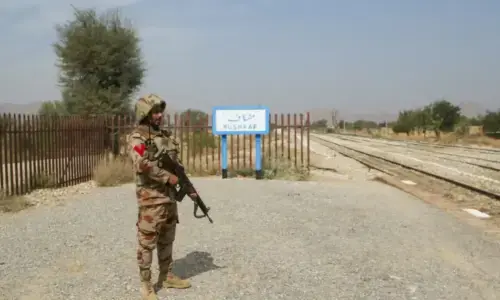
This is Keran, in the Neelum valley, 100kms north-east of Muzaffarabad. The Neelum river here forms part of the Line of Control that separates occupied Kashmir from Azad Kashmir.
Mohammad Faizan Khan, 16, lives in the latter, his bride-to-be and paternal cousin, Samaira Bashir, in the Indian-held side. Tradition calls for the mother of the groom-to-be to place the engagement ring on the finger of her son's fiancee. Instead, the ring had to be ferried, along with a golden necklace, dresses and gifts, across the river in two bags on a rope.
The ring was then placed on the finger of 16-year-old Samaira by a maternal aunt. Faizan was not present - tradition also dictates the betrothed should not come face to face at such occasions. The family members had remained out of touch until Pakistan and India began a cease fire on the Line of Control a year ago.
Faizan's father and his two uncles, along with their families, had crossed the line from Keran, a village in Indian-held Kashmir, into Azad Kashmir in 1990. However, the three brothers left behind their four sisters in Keran.
Family members have often stood by the river to exchange gifts. It was here too that Faizan's father and sisters gathered on either side to talk and where he sought to make the match.
"I sought the hand of my niece for my son and my sister agreed happily and today we performed the engagement," said Mohammad Bashir, who lives in one of the refugee camps near Muzaffarabad.
Engagement greetings were shouted across the roaring river. Faizan's mother, Malick Zadee, said: "I am happy that I engaged my son with his cousin as per our wish and desire.
"But my heart is also hurting because we performed the engagement away from our homes on the river bank and could not celebrate it together in a traditional way in our village at the girl's home in presence of all our relatives and friends."
She regretted not being able to place the ring or present gifts. "We are helpless. They are there and we are here. We could not cross the Line of Control. "They were crying across the river and we were crying on this side. Had we been at our homes we would have celebrated it together joyfully."
Faizan's parents still retain some hope that a solution to Kashmir's problems can be found so they will be able to marry the young couple in their village in occupied Kashmir.
"We expect to wed them in the next four or five years and hopefully by that time the Kashmir issue will be resolved or there will be a bus service so we can marry them in our native village in the presence of all our kin and friends," said Mohammad Bashir. -Courtesy: BBC World.