0
0

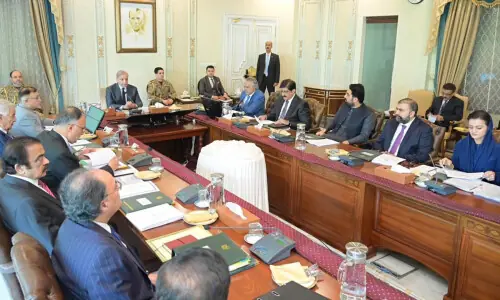
WASHINGTON, Oct 15: Top officials from the Group of Eight (G8) powers met here on Friday to discuss ways of making Iran give up its alleged nuclear weapons programme.
The meeting is to discuss measures proposed by Britain, France and Germany, which have led a European initiative to engage Iran over its nuclear activities. The International Atomic Energy Agency has set a Nov 25 deadline for Iran to suspend uranium enrichment activities and answer all questions about its nuclear ambitions.
The United States wants the IAEA to refer Iran's case to the UN Security Council for possible sanctions action. Washington has taken an increasingly hard line on Iran, which it accuses of moving towards nuclear weapons status.
The US is being represented at the Washington meeting by John Bolton, the State Department's under secretary for arms control and international security, and Deputy Secretary of State Richard Armitage.
Top officials from the foreign ministries of the other G8 members - Britain, Canada, France, Germany, Italy, Japan and Russia - are also taking part. No official details have been given on what the European nations have proposed to persuade Iran to halt uranium enrichment.
The Washington meeting, which is being held at the State Department, just blocks from the White House, started on Friday morning and is expected to stretch into the afternoon, diplomatic sources said.
It came as Iran insisted its nuclear programme was purely for civilian power use. But a top Iranian lawmaker said on Thursday Tehran would bar international nuclear inspections if debate on its nuclear programme moved to the UN Security Council as sought by Washington.
No official statements are expected at the end of the meeting, which is being portrayed by the State Department as an opportunity to discuss and exchange ideas.
Diplomatic sources said the meeting has also been convened to send a signal to Tehran that the international community is seriously concerned about Iran obtaining nuclear weapons.
Armitage has said that Washington is open to proposals regarding Iran, but that the matter must be referred to the Security Council unless Tehran comes forward quickly to resolve international concerns.
US diplomats have said a softening of its hardline policy against Tehran is not being considered, but analysts believe some incentives might be in the offing if Iran shows good will on the issue.
The sources said Washington is not likely to seek a more open dialogue with Tehran on the matter until after the Nov 2 presidential election here, rather than risk a political storm as voters head to the polls. -AFP