0
0

KABUL, Feb 1: Afghanistan's capital is under tight security following two suicide bombings in the city last week, with authorities worried that more potential bombers were waiting to strike as Eid holiday begins.
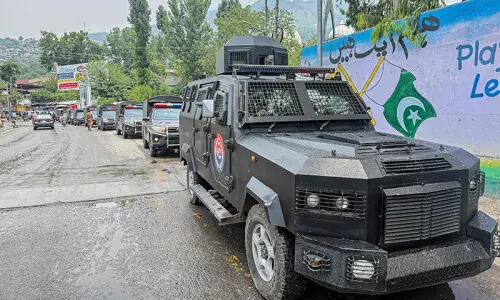
Kabul deputy police chief Mutahullah Khan Rahmani said his force had precautions in place for Eid-al-Adha on Sunday, so that "our people can spend the holidays in peace and quiet".
"In every district of Kabul city we have police searching vehicles and stopping vehicles with no number plates or black windows," he said. "I cannot confirm that dozens of suicide bombers are in the city, but we also have reports and we have heard rumours about it."
Taliban sources have warned since December that there are up to 60 suicide bombers in Kabul waiting for a chance to attack.
Remnants of the ousted Islamic fundamentalist regime have claimed responsibility for last week's suicide bombings against members of Kabul's peacekeeping International Security Assistance Force (ISAF) which killed three people and injured more than a dozen.
On Tuesday a man with explosives strapped to his body walked up to a Canadian ISAF patrol as it slowed down to negotiate a ditch and detonated his device, killing one Canadian soldier and an Afghan civilian and injuring nine others.
The next day a taxi loaded with explosives blew up between two ISAF vehicles, killing one British soldier and injuring four others, two seriously.
The attacks are the most grave against ISAF since a suicide car bomber killed himself and four German soldiers in June 2003, and were an indication of an increased level of violence in the city, according to the commander of British contingent of the ISAF, Colonel Mike Griffiths.
"Two attacks of a similar nature in two days - you could link it directly to a pattern, an upsurge in violence, absolutely," Griffiths told a press conference, adding that he was certain that the suicide bomber who killed the British soldier was not acting alone.
There has been "massive amounts of intelligence" suggesting that there were some 12 vehicles circulating through the city for some months, said one Kabul-based security expert who asked not to be named.
"Every day there is something going on with suspicious vehicles in town," he said, citing the increased number of improvised explosive devices discovered lately, but added that he did not think there had been an upsurge in violence "because it was already there."
In late December Afghan authorities apprehended a potential suicide bomber near Kabul international airport, however the man detonated the explosives strapped to his body after being detained, killing himself and five intelligence agents.
A Taliban spokesman claiming responsibility for the blast at the time said it was aimed at ISAF troops and warned that dozens more suicide bombers were in the capital.
An ISAF spokesman said the force would continue its operations as normal, including foot patrols, despite last week's bombings. But he said that some restrictions had been placed on soldiers' movements.
"Troops have been advised to be more alert, to take nothing for granted and also to take care of themselves by dressing appropriately and by being more aware of what's happening around them," Lieutenant Commander Frank Cockburn said.
"Risk assessments will be done every time someone leaves the compound."
The US embassy has also issued a warning to its citizens to stay off the streets of the capital, defer travel to the city and avoid military installations because of the risk of further bombings.
"It is possible that such attacks may continue and even escalate as Eid celebrations get underway from February 1 through February 3," it said in a written warning.
Many non-government organisations based in Kabul, of which there are several hundred, have also banned staff from visiting restaurants and shops and restricted their travel despite indications that the attacks so far have been aimed at military targets. -AFP