



 0
0

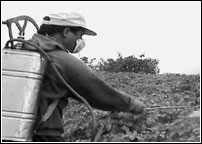 CROP pests such as weeds, insects and diseases are menace for crop plants which prevent them from reaching their genetic potential, limiting their productivity.
Currently about 3.5 million tons of pesticides are being used worldwide to control agricultural pests. Among these, the use of herbicides accounts for nearly 50 per cent, followed by insecticides (30 per cent), fungicides (15 per cent) and others five per cent. A major portion of pesticides pollute soil, air and water. The contamination of the environment by pesticides is a common phenomenon in almost all agrarian societies including Pakistan.
The continuous use of pesticides is not only increasing the number of pesticide resistant bio-types but also polluting the environment, deteriorating the quality of food with negative impact on human and animal health.
According to FAO, the environmental damage of these hazardous chemicals amounts to $100 billion along with deaths and sickness of about 0.22 and 3.0 million people, respectively each year.
About 30 million farm workers are at risk of pesticides poisoning in the Third World. Considerable efforts have been made in the near past in designing alternative strategies for insect-pests, diseases and weed management. Although pesticides cannot be eliminated, their use can be minimised by exploiting the allelopathy as an alternative tool for pest management in crop production.
Allelopathy is a natural and environment-friendly phenomenon that involves inhibitory or promotional effects of released phyto-toxins by the crop plants which are known as allelochemicals. It offers great potential for controlling insect-pests, diseases and weeds in field crops. However, allelopathy has been found more successful for weed control in agricultural systems.
Allelochemicals are present in plant parts including leaves, flowers, seeds, stems and buds of crops like sorghum, sunflower, brassica, rice, wheat, maize, tobacco and taller plants.
Allelopathic crops may provide weed control in number of ways such as (1) the use of phytotoxic crop residues as mulches and cover corps (2) use of allelopathic crops in crop rotations (3) intercropping with allelopathic crops (4) use of allelopathic crop water extracts.
Allelopathic crop water extracts can be used in combination with herbicides, their efficacy may be enhanced when they are mixed with synthetic herbicides. Analysis of crop water extracts showed that natural/organic chemical substances as alkaloids, tannins, phenolics, coumarins, terpenes, cyanates, glycosides, quinines and coumarins are found in crop water extracts of different cops.
The results of the research conducted in recent past revealed that one-third or half dose of herbicides combined with allelopathic crop water extracts gave the same weed control as by the label (full) dose of herbicides in different field crops. Herbicide use can be reduced by 50-70 per cent in combination with allelopathic plant water extracts for weed control in field corps like wheat, cotton, rice, maize and canola.
Allelochemicals are water soluble and can easily be extracted by farmers at their own farm with very little expenditure. After harvesting the crops (sorghum, sunflower, brassica, wheat, rice, maize and tobacco) their economical portion is removed.
Now herbage of crop (stalks + leaves) is allowed to dry in shade for considerable time, so that all plant parts become dry. Dried plant material is chopped with common fodder cutter in to 2-3 cm pieces. This chaffed material is soaked in water with a ratio of 1:10 (1 kg of plant material is soaked in 10 litres of water). After 24 hours the soaked material is filtered to obtain the desired crop water extracts. These extracts are concentrated up to 20 times by boiling for easy handling and application in the field.
The reduction in herbicide use leads to environmental safety, hazardous effects of synthetic chemicals may be minimised. Contamination-free, quality food stuff is required to compete in the international market and to fetch good prices. The cost of production of farmers is reduced because crop water extracts are cheaper source than synthetic herbicides for weed management. Similarly, expenditure on import of herbicides (Rs3 billion per year) can be minimised by using this technology.
There is need to disseminate knowledge for promotion of this useful approach.Farmers should be educated regarding benefits, preparation and use of allelopathic crop water extracts at their own farms. Research projects should be given to research institutions to search for suitable combinations of allelopathic crop water extracts and investigating the substances responsible for weed suppression.
Latest analytical instruments should be provided to institutes, conducting research on allelopathy for identifying allelochemicals. Modern bio-technological approaches may be utilised to develop crop cultivars with greatest allelopathic potential. Commercial products of plant/crop water extracts may be launched in collaboration with private companies engaged in pesticides business.






























