0
0

RAWALPINDI, Dec 29: The year 2009 has been declared by the United Nations as International Year of Natural Fibres (IYNF) to promote the efficiency and sustainability of such fibres and to foster an effective international partnership among the various natural fibres industries.
The year will raise consumer awareness of natural fibres and strengthen demand for natural fibre products, improving the livelihoods of the farmers, who produce them and revenues for countries that export them, says UN Food and Agriculture Organisation (FAO). At the same time promoting the use of natural fibres will enhance the environment.
Natural fibres may be defined as those renewable fibres from plants or animals, which can be easily transformed into a yarn for textiles. The uses of natural fibres range from high-priced apparel to industrial applications and in most, if not all, of these applications they are subject to competition from synthetic substitutes.
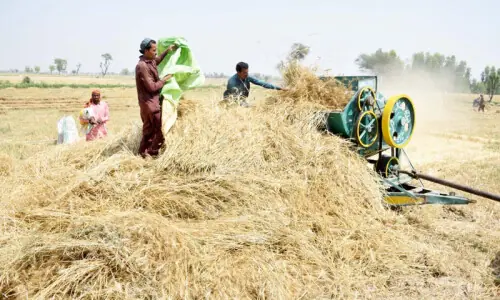
Apart from their importance to the consumer and in their various industrial uses, natural fibres are an important source of income for the farmers.
According FAO, the animal fibres are wool, hair, fur and secretions such as silk. Close to 30 million tons of natural fibres are produced annually in the world of which cotton is dominant with 20 million tons, wool and jute each around 2 to 3 million tons followed by a number of others.
Pakistan is among the leading countries, which produce cotton known as the king fibre and also called the white gold enjoying a predominant position amongst all cash crops in Pakistan.
Natural fibres form an important component of clothing, upholstery and other textiles for consumers, and many of them also have industrial uses in packaging, paper-making and in composite materials with many uses, including automobiles.
Natural fibres are generally considered to be more environmentally friendly than synthetics in their production and disposal. However, there are areas where these industries are not as environmentally clean as they might be, for example, in the use of agrochemicals on fibre crops in some countries, and the contamination of water as a result of retting.
The year of natural fibres will emphasise the environmental advantages of these fibres, while seeking at the same time to promote greater realisation of their clean potential.
Since the 1960s, the use of synthetic fibres has increased and natural fibres have lost a lot of their market share. The main objective of the international year is to raise the profile of these fibres, to emphasise their value to consumers while helping to sustain the incomes of the farmers.