ISLAMABAD, Dec 25: The Pakistan Economy Watch (PEW) said on Thursday that an overwhelming majority of Pakistani expatriates was bypassing the banking system and using hundi to send money home.
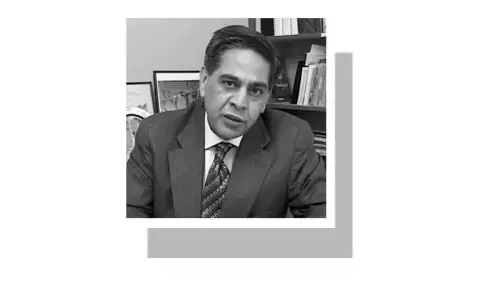
The PEW released a report titled ‘Centuries-old hundi system versus modern banking’, and its president Dr Murtaza Mughal told APP that legal and administrative steps taken so far had failed to curb the parallel remittance system.
He said the illegal money transfer was in billions of dollars while only a small amount came through legal channels.
He blamed inefficiency of banks, their exorbitant charges and late delivery for the thriving hawala business.
“The system of hawala is faster than that of banks and it guarantees anonymity because paper work, like identification and account opening, is not involved in it,” he said.
“Apart from reliability, speed and cost-effectiveness, it dodges the exchange and tax regulations,” he said.
He said that the hundi system was unaffected by international and regional scrutiny, political, economic or any other factor, including global resolve to curb it.
“The Foreign Terrorist Asset Tracking Centre of the US and Organisation for Economic Cooperation and Development, having 30 countries as members, and other international institutions have yet to prove their effectiveness. Many countries, including Pakistan, have frozen a large number of accounts but experts believe that it is only a fraction of the whole system. It has a very negligible impact,” he said.
The PEW report says: “The worldwide anti-money laundering steps backed by the US have injected new blood into this business in which some 5,000 people are believed to be involved in Pakistan only. Involvement of some bankers and influential people has also boosted the hundi business.”
A person who uses hundi pays nominal commission, while the other who opts for accepted rules, gets lower exchange rate fixed by the government. One may lose Rs4 to Rs6 on every dollar sent through banking channel.
The issue must be addressed on priority, the report suggested.
“This network is hard to crack and it will flourish until the government takes steps to make legal transfer of funds efficient by reducing red tape, making it competitive, cost-effective and accessible,” the report added.—APP